Walking as a Tool for Better Posture and Core Strength
24 September 2026
Walking gets treated like the consolation prize of exercise. It is what people do when they cannot run, what doctors recommend when they do not want to prescribe anything stronger, what fitness culture files under "better than nothing." That framing misses something important. Walking is a full-body movement pattern that, when performed with attention, trains the exact muscular and neurological systems responsible for upright posture and trunk stability. It is not a lesser version of "real" training. It is a different tool, and for posture and core function specifically, it may be one of the most accessible and sustainable tools available.
The catch is that walking only produces these benefits under certain conditions. A shuffle around the block with collapsed posture reinforces the same patterns you are trying to fix. A purposeful walk with organized alignment does something else entirely. This article breaks down the mechanics, the trade-offs, the mistakes, and the practical decisions that determine which outcome you get.
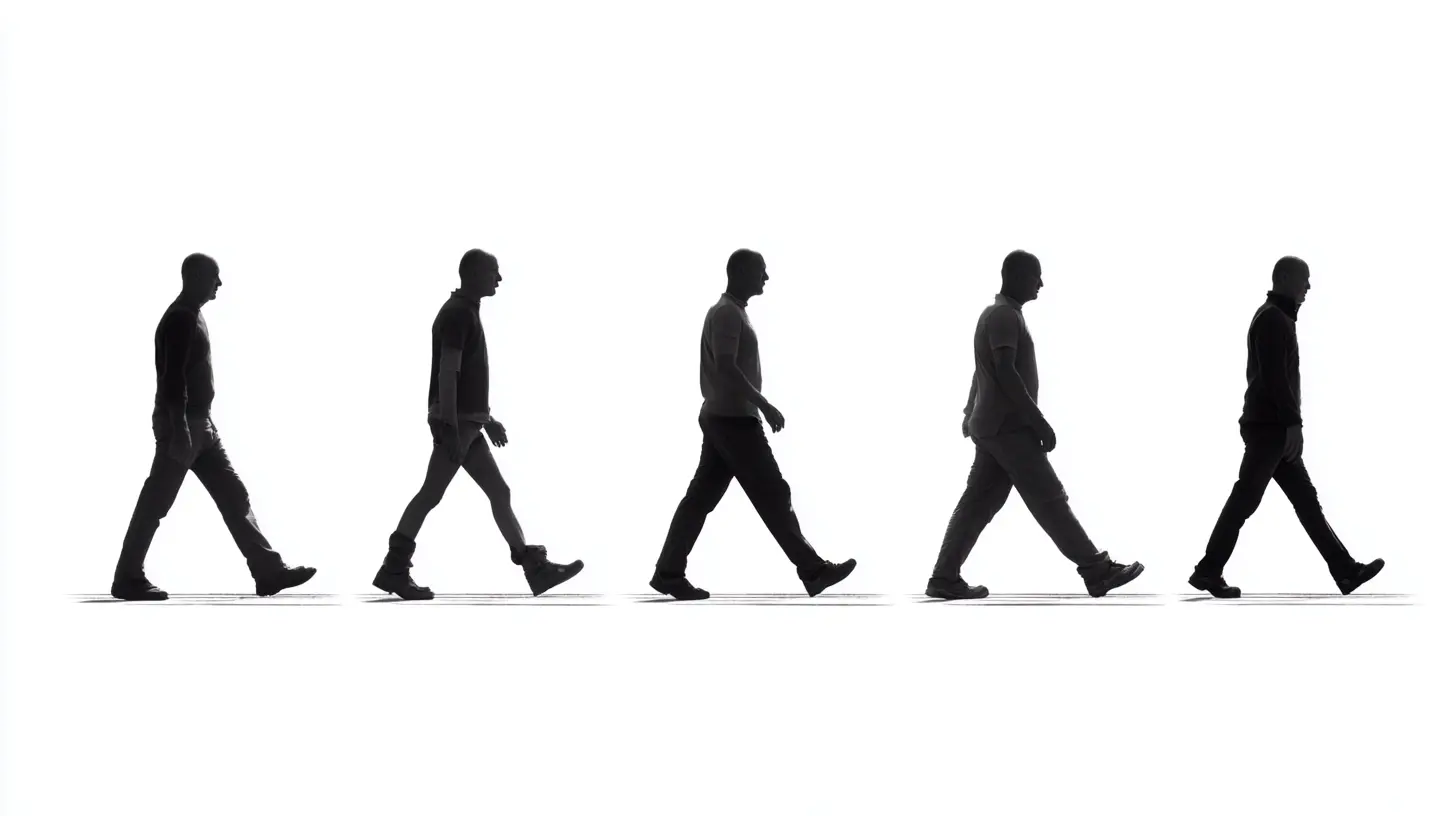
Why Walking Affects Posture at All
Posture is not a static position you hold. It is a habit of organization that your nervous system defaults to under load and fatigue. Your body has a set of postural reflexes, driven largely by the vestibular system, visual input, and proprioceptive feedback from the feet, spine, and hips. Walking feeds all three of those systems simultaneously in a way that sitting and standing do not.Every step sends a wave of sensory information up the spinal cord. The sole of the foot reports pressure distribution. The ankles report angle and load. The pelvis reports rotation and tilt. The spine reports small counter-rotations. The brain integrates this stream and issues continuous micro-adjustments to keep you upright and moving forward. Over thousands of steps, this loop effectively rehearses the coordination that holds you upright.
This is why walking can change posture in ways that static stretching or isolated strengthening often cannot. You are not just lengthening a tight muscle or strengthening a weak one. You are retraining a pattern.
The Anti-Gravity Function of the Trunk
There is a useful concept in rehabilitation called the anti-gravity function of the trunk. It refers to the deep muscles whose primary job is not to move the spine but to prevent unwanted movement while other forces act on the body. The deep abdominal wall, the pelvic floor, the diaphragm, and the deep spinal stabilizers all participate in this function.Walking loads this system gently and rhythmically. Each heel strike creates a small rotational and compressive force that the trunk must absorb. Each push-off creates a small extension and rotation that the trunk must control. The result is a low-level, high-repetition training stimulus that is difficult to replicate with planks or crunches, which tend to be static or single-plane.
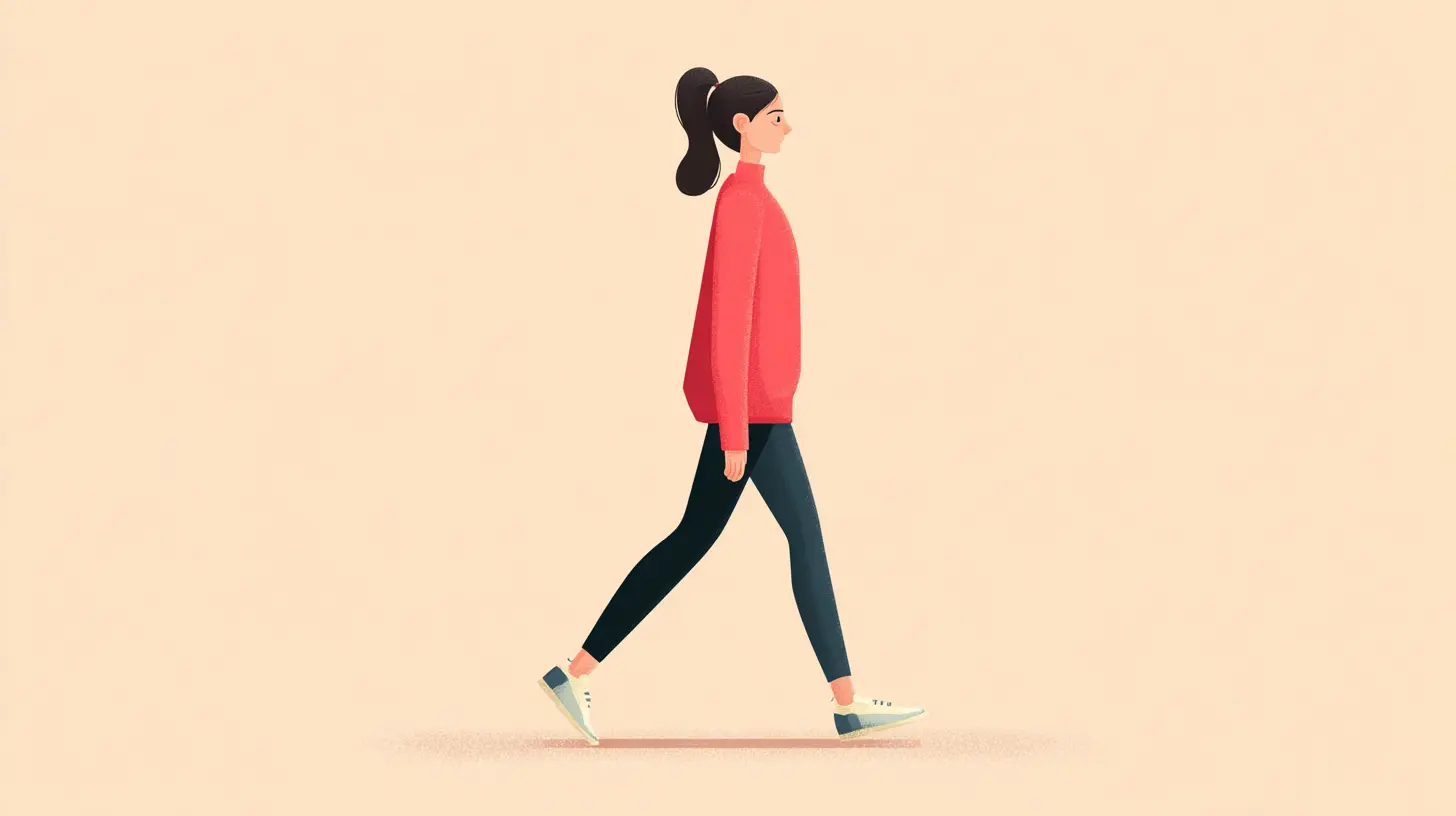
The Specific Muscles Walking Trains
People often assume walking is mostly a leg exercise. It is, but the trunk contribution is substantial and often overlooked. Here is what actually engages during a well-organized walk.Deep Abdominal Stabilizers
The transversus abdominis and internal obliques fire in a coordinated pattern during gait. Their role is to manage rotation between the pelvis and ribcage. If you watch someone walk with a stiff, non-rotating trunk, you are watching a strategy that offloads this work onto the hip joints and lower back. If you watch someone walk with excessive trunk sway, you are watching the opposite problem: insufficient control.Spinal Extensors
The erector spinae and multifidus work throughout the gait cycle to keep the spine from collapsing forward under gravity. Their demand increases with speed, incline, and load. This is one reason a brisk walk uphill challenges the back in a way a slow flat walk does not.Glutes and Hip Stabilizers
The gluteus medius is one of the most important postural muscles in the body. It prevents the pelvis from dropping on the swing side during single-leg stance. Every step is a single-leg stance moment. A weak gluteus medius produces the classic Trendelenburg pattern, where the hip hikes or drops and the trunk leans to compensate. Walking trains this muscle every step, but only if you are actually loading it properly.Diaphragm and Breathing Mechanics
The diaphragm is both a breathing muscle and a trunk stabilizer. Walking at a pace that increases respiratory demand forces the diaphragm to work harder, and this interacts with intra-abdominal pressure and trunk stiffness. Shallow chest breathing during walking undermines the stability contribution of the diaphragm. Nasal breathing, or at least diaphragmatic breathing, supports it.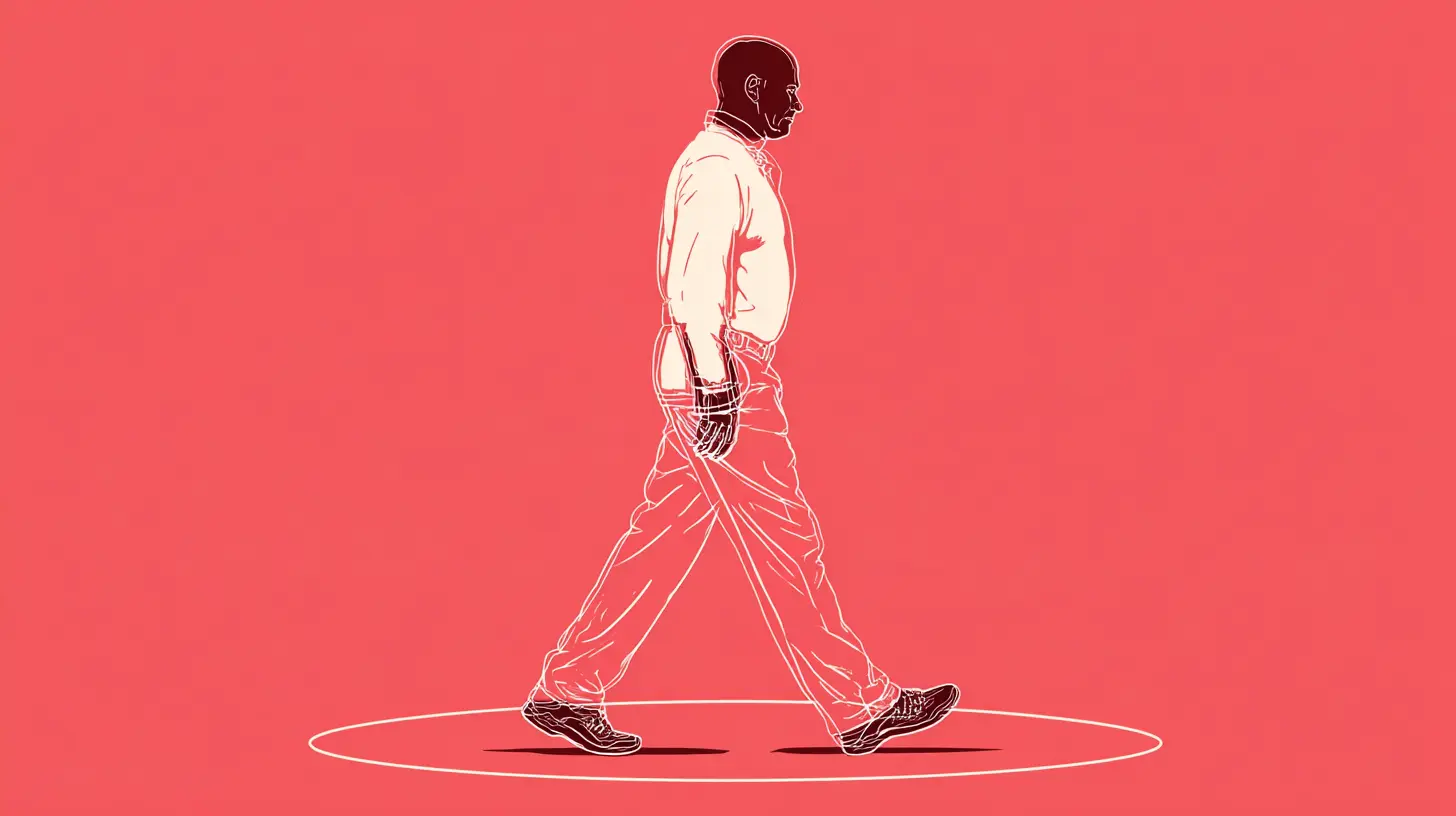
What Good Walking Posture Actually Looks Like
There is a lot of vague advice about walking tall. Here is what that means in concrete terms.- The head sits roughly over the ribcage, not pushed forward. The chin is level, not tucked or jutted.
- The ribcage sits over the pelvis, not thrust forward or collapsed down.
- The pelvis is roughly level side to side. A small amount of rotation is normal and desirable.
- The feet land under or slightly in front of the body's center of mass, not way out ahead.
- The arms swing from the shoulders, not from the elbows, and the shoulders stay relaxed.
This alignment is not a rigid pose. It is a range within which the body can move efficiently. The goal is not to lock into it but to return to it repeatedly as you walk.
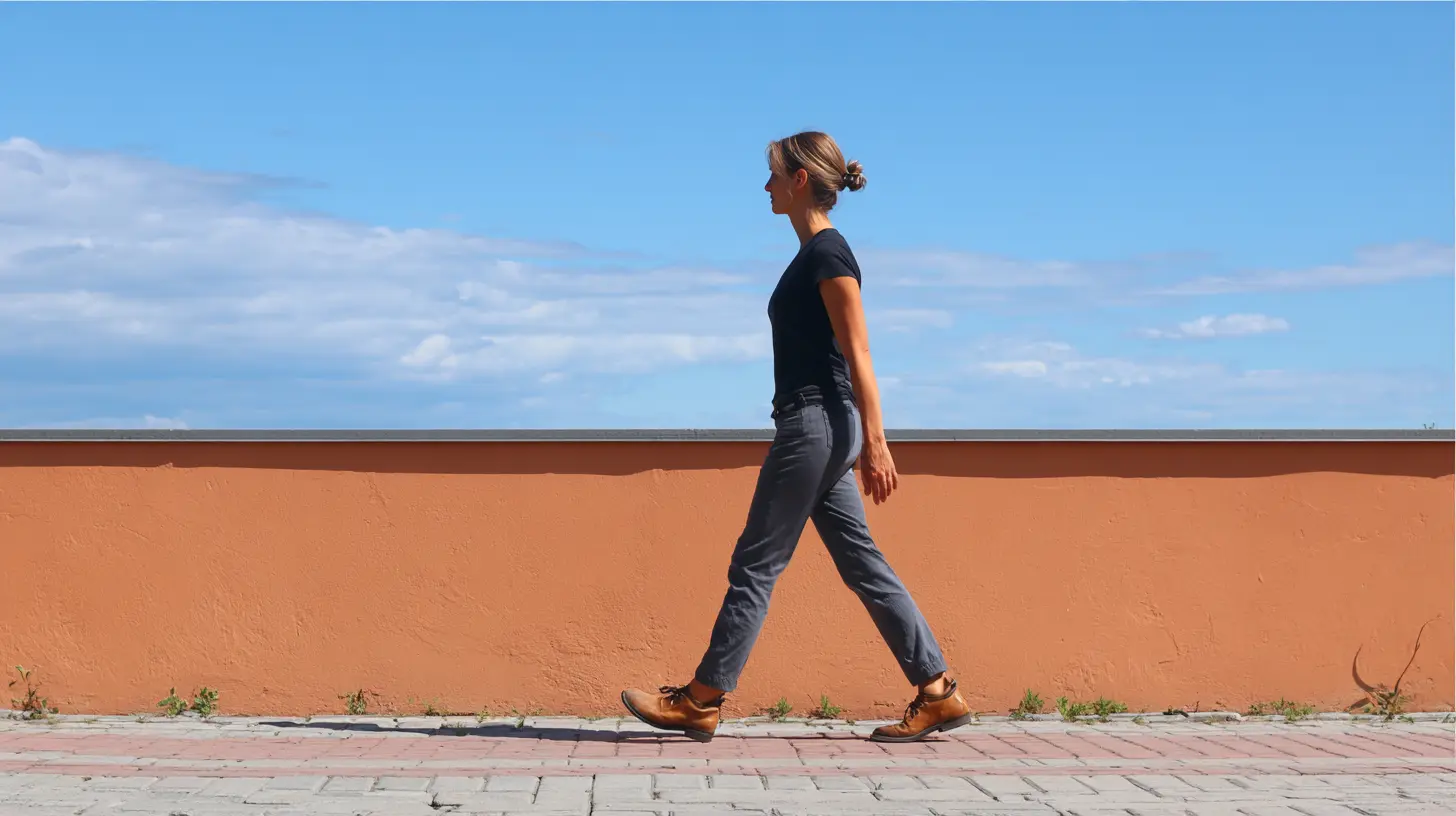
Common Mistakes That Undermine the Benefit
Most people who walk for posture do not get the results they expect, and the reason is usually one of these.Walking Too Slowly to Challenge Anything
A casual stroll is fine for circulation and mood, but it does not meaningfully challenge the postural system. To train posture and core, you need enough speed or incline to create real demand. A useful benchmark: you should be able to talk in short sentences but not hold a long conversation without effort. That is roughly the intensity where the trunk has to work.Overstriding
Taking long steps feels powerful, but it usually produces a heel strike far in front of the body, which sends braking forces up the leg and encourages the trunk to lean back. A shorter, quicker cadence is generally easier on the body and more effective for posture training.Holding the Breath
Many people unconsciously hold their breath when they try to "stand tall." This defeats the purpose. The diaphragm needs to move to contribute to trunk stability. Breathing should be continuous and relaxed.Gripping the Shoulders Down and Back
The cue "shoulders back" often produces a rigid, military posture that is unsustainable. The better cue is to let the shoulders rest on a wide, supported ribcage. The shoulder blades should be able to glide, not clamp.Walking Only on Flat, Predictable Surfaces
Flat pavement is convenient but monotonous. Varied terrain, small inclines, and changes in pace challenge the postural system far more. The nervous system responds to variability.Ignoring Footwear
Thick, heavily cushioned shoes with a raised heel change the way the foot interacts with the ground. They reduce proprioceptive feedback and can encourage a heel-first, low-cadence gait. Minimal or low-drop shoes are not for everyone, but they do change the training stimulus. The right choice depends on your foot health, history of injury, and current tolerance.Walking Versus Dedicated Core Training
This is where honest comparison matters. Walking is not a replacement for targeted core work. It is a complement.| Dimension | Walking | Dedicated Core Training |
|---|---|---|
| Primary stimulus | Coordination, endurance, gait integration | Strength, control, specific activation |
| Load | Low to moderate | Can be very high |
| Transfer to posture | High, because it is the actual task | Moderate, depends on carryover |
| Risk of injury | Low | Higher if progressed poorly |
| Accessibility | Very high | Requires instruction and space |
| Time efficiency | Moderate | High for specific goals |
The strongest approach is usually both. Walking builds the endurance and coordination to hold good posture throughout the day. Dedicated core work builds the raw strength and control to make that posture available in the first place. Someone with a weak, uncoordinated trunk will not fix it by walking alone. Someone with decent strength but poor gait habits will not fix it with planks alone.
How to Progress Walking for Posture and Core
Progression is not just about distance. Here are the levers you can pull, roughly in order of how most people should approach them.1. Consistency first. Three to five walks per week, even short ones, beats one long walk. Postural change is a nervous system adaptation, and the nervous system responds to frequency.
2. Cadence. Increase steps per minute rather than stride length. A metronome app or a simple count can help. Most people walk at a lower cadence than they think.
3. Incline. Hills or a treadmill incline increase glute and trunk demand without requiring speed.
4. Uneven terrain. Grass, trails, and gravel force continuous micro-adjustments.
5. Load. A weighted vest or backpack adds demand, but only after baseline mechanics are solid. Poor mechanics plus load equals injury.
6. Backward walking. Walking backward on a safe surface or treadmill challenges different muscle groups and is used in some rehabilitation settings.
7. Poles or Nordic walking. Adds upper body engagement and can improve trunk rotation, though it changes the gait pattern significantly.
Each progression should be introduced one at a time, and only when the current level feels easy and well-controlled. This is the same principle used in strength training, and it applies here.
Walking as a Diagnostic Tool
One of the most underrated uses of walking is as a self-assessment. If you walk regularly with attention, you start to notice asymmetries. One hip feels tighter. One foot turns out more. One shoulder sits higher. These observations are valuable because they show up long before pain does.A simple practice: once a week, walk for five minutes at an easy pace and scan from feet to head. Notice what feels different left versus right. Notice where you hold tension. Notice where you feel unstable. This is not a diagnosis, but it is useful information to bring to a physical therapist or trainer if something persists.
When Walking Is Not the Right Tool
Walking is broadly safe, but it is not universally appropriate as a posture intervention. Consider these situations.- Acute low back pain. Walking may help or hurt depending on the cause. Disc-related pain often improves with walking. Facet joint pain or certain instability patterns may worsen. Get guidance.
- Severe foot or ankle problems. Structural issues, neuropathy, or recent injury may make walking a poor choice until addressed.
- Advanced balance problems. Walking outdoors without support may be unsafe. A treadmill with handrails or a supervised program is a better starting point.
- Cardiovascular restrictions. Intensity progression should be cleared with a physician.
In these cases, walking is not off the table. It just needs to be modified, supervised, or sequenced after other work.
Practical Programming Example
Here is a simple four-week structure that respects the principles above. It assumes no major injury and a baseline of being able to walk for 20 minutes without pain.Week 1. Three walks of 20 minutes on flat ground. Focus only on breathing and relaxed arm swing. No pace target.
Week 2. Three walks of 25 minutes. Add a five-minute segment at a slightly faster cadence. Notice whether your trunk stays organized when you speed up.
Week 3. Two flat walks of 25 minutes, one walk of 30 minutes on gentle hills. Pay attention to how your pelvis and ribcage behave on the inclines.
Week 4. Two walks of 30 minutes with varied terrain, one walk of 30 minutes with a light backpack or vest. Reduce load if posture degrades.
After four weeks, reassess. If posture holds well under all these conditions, you can add more load or speed. If it does not, back off and rebuild.
The Overlooked Role of Recovery and Sleep
Posture is partly a function of tissue quality, and tissue quality depends on recovery. Walking improves circulation and can support recovery, but it cannot compensate for chronic sleep deprivation or poor nutrition. If you are walking daily and still feel stiff and collapsed, look at sleep and stress before adding more walking. This is not a soft recommendation. It is a mechanical one. Connective tissue remodels during recovery, not during the walk itself.A Realistic Perspective
Walking will not give you the posture of a dancer in six weeks. It will not replace strength training, and it will not fix structural problems that require medical attention. What it can do, reliably and sustainably, is build the endurance and coordination to hold yourself upright through a long day. That is not a small thing. Most posture problems are not strength problems in the gym sense. They are endurance and habit problems. Walking addresses both, if you do it with intention.The people who get the most from walking for posture are not the ones who walk the farthest. They are the ones who treat each walk as a practice, not a commute. They pay attention. They adjust. They progress gradually. And they keep going, because the tool is simple enough to sustain for years.
all images in this post were generated using AI tools
Category:
Walking For HealthAuthor:

Eileen Wood