Natural Home Remedies That Will Still Be Trending in 2026
15 April 2026
Let’s be honest—in a world of flashing screens, instant downloads, and next-day delivery, our fascination with the slow, steady wisdom of natural home remedies feels almost rebellious. It’s a comforting anchor in a churning sea of quick fixes. While health tech will keep advancing at a dizzying pace, our deep-rooted desire to connect with simple, time-tested solutions isn’t going anywhere. In fact, I believe it’s only getting stronger.
So, what makes a remedy truly timeless? It’s not just about being "old." It’s about efficacy, safety, accessibility, and a kind of elegant simplicity that modern science often ends up validating. As we look toward 2026 and beyond, the trends won't be about abandoning modern medicine, but about intelligent integration. The future of natural remedies is smart, researched-backed, and personalized. Let’s dive into the remedies that have the staying power to remain not just relevant, but essential, in your wellness toolkit for years to come.
The Timeless Appeal: Why Grandma’s Cabinet Isn’t Closing
Before we get to the specific remedies, let’s talk about why this movement has such legs. It’s more than nostalgia.First, there’s a powerful craving for agency. When you feel a headache coming on and you reach for peppermint oil instead of (or before) a pill, you’re taking an active, hands-on role in your well-being. You’re not just a passenger; you’re the pilot. This sense of control is incredibly empowering for our mental and physical health.
Then, there’s the sustainability factor. A jar of honey, a ginger root, a bottle of apple cider vinegar—these are multi-use, often minimally packaged, and have a long shelf life. In an eco-conscious world, reducing our reliance on single-use plastics and complex pharmaceutical supply chains is a tangible benefit that resonates deeply.
Finally, and perhaps most importantly, is the principle of first resort. Think of your body like a finely tuned instrument. A natural remedy is often like a gentle tuning, a subtle adjustment. It’s what you try first for minor, everyday ailments. This layered approach—starting with the gentlest option and escalating only if needed—is a cornerstone of mindful, proactive healthcare. It’s a philosophy that 2026 will fully embrace.
The Perennial Powerhouses: Remedies Built to Last
These are the heavy hitters, the remedies with centuries of anecdotal evidence now being lit up under the microscope of modern research. Their complexity is their strength.1. Raw, Local Honey: The Sweet Ambassador of Health
Forget the ultra-processed syrup in the bear-shaped bottle. The honey we’re talking about is raw, unfiltered, and ideally, sourced from within a few miles of your home. Why is this such a future-proof remedy?It’s a triple-threat healer. First, its thick, viscous texture is a demulcent, forming a soothing film over irritated throat membranes. Second, its natural hydrogen peroxide content gives it mild antibacterial properties. Third, and this is the real magic for 2026’s allergy-prone populations, local honey contains trace amounts of pollen from your immediate environment. The theory is that consuming it regularly, like a very sweet, gentle vaccine, can help your immune system become less reactive to those local allergens.
The 2026 Twist: We’ll see hyper-localization. Apps connecting you to beekeepers in your ZIP code, and a deeper understanding of specific floral sources (like Manuka for digestive health, or Buckwheat for its antioxidant punch). Honey will be less of a generic sweetener and more of a targeted, functional food.
2. Apple Cider Vinegar (ACV): The Fermented Phenom
The "mother" in ACV—that cloudy, cobweb-like strand of proteins, enzymes, and bacteria—is the star of the show. This isn’t just vinegar; it’s a living, fermented tonic.Its proposed benefits are vast, but two stand out for longevity. For blood sugar management, several studies suggest that acetic acid (the main component of vinegar) can improve insulin sensitivity and lower the glycemic response after a starchy meal. A tablespoon in a large glass of water before a meal might be a simple tool in the metabolic health toolkit of the future.
Secondly, it’s a digestive aid. The acidic nature can help supplement stomach acid (which can be low in some people), promoting better breakdown of food. The probiotic potential of the "mother" also supports a healthy gut microbiome, which we now know is central to everything from immunity to mood.
Word of Caution (The Future is Informed!): Always dilute it. Drinking it straight is a one-way ticket to eroding tooth enamel and irritating your esophagus. The trend in 2026 is smart, safe application, not reckless consumption.
3. Ginger & Turmeric: The Dynamic Duo of Inflammation
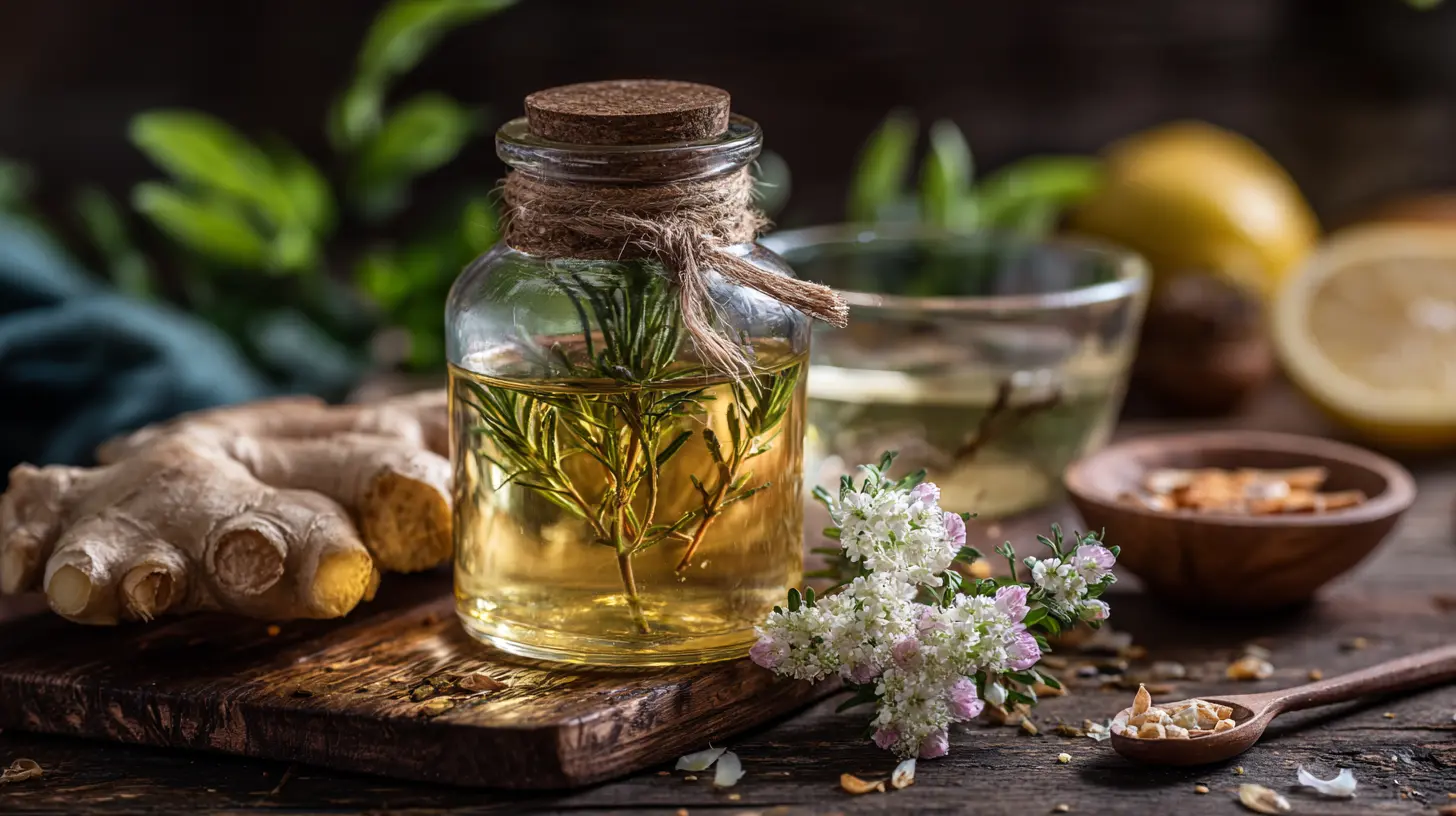
If the body is a landscape, then chronic, low-grade inflammation is like a slow-burning forest fire smoldering beneath the surface. Ginger and turmeric are the gentle, consistent rain that helps put it out.Ginger, with its sharp, pungent kick (thanks to gingerol), is a champion for nausea and digestive upset. Whether it’s motion sickness, morning sickness, or an upset stomach, ginger works directly on the stomach and the nervous system. It’s nature’s motion sickness pill, without the drowsiness.
Turmeric, and its superstar compound curcumin, is the golden child of anti-inflammatory research. The catch? Curcumin is poorly absorbed on its own. Enter black pepper. Piperine, a compound in black pepper, enhances curcumin absorption by a staggering 2000%. This powerful pairing is a lesson in synergistic wisdom that ancient healers understood and modern science confirms.
The 2026 Twist: We’ll move beyond just adding turmeric to curry. Think golden (turmeric) lattes with a crack of black pepper, encapsulated formulas with enhanced bioavailability, and topical balms for sore joints. This duo exemplifies the future: traditional pairings validated by science for targeted wellness.
4. The Humble Salt Water Gargle: The Unshakeable Baseline
Sometimes, the simplest solutions are the hardest to improve upon. In an era of complex mouthwashes with lengthy ingredient lists, the salt water gargle remains a pristine, effective standard.The science is beautifully straightforward. Salt is hypertonic. This means it draws fluid out of the swollen, inflamed tissues in your throat through osmosis, providing immediate relief from that painful, scratchy feeling. It also creates a temporary, less hospitable environment for bacteria. It’s not a sterilizing bomb; it’s a gentle environmental shift that helps your own immune cells do their job better.
It requires no special equipment, has zero side effects, and costs pennies. In 2026, as we become more skeptical of over-formulated products, this kind of elegant, accessible simplicity will be prized more than ever.
The Rising Stars: Ancient Practices for Modern Minds
These remedies are less about a single substance and more about a practice—a ritual of healing that addresses the intricate connection between mind and body.5. Mindful Breathing & Cold Exposure: Regulating Your Inner Climate
We carry the most powerful healing tool with us everywhere we go: our breath. But in 2026, "just breathe" will be backed by serious neuroscience. Techniques like box breathing (inhale 4, hold 4, exhale 4, hold 4) or diaphragmatic breathing are proven to activate the parasympathetic nervous system—your body’s "rest and digest" switch. This directly counters the stress-induced "fight or flight" mode that underlies so many modern ailments, from anxiety to high blood pressure.Pair this with the controlled shock of cold exposure (like a 30-second blast at the end of your shower). The cold is a potent stressor that, when applied briefly and intentionally, trains your nervous system and vascular system to be more resilient. It’s like weightlifting for your autonomic nervous system. This combination—calming the mind with breath and challenging the body with cold—is a potent, free, and deeply empowering protocol for mental and physical fortitude.
6. Probiotic & Prebiotic Foods: Feeding the Inner Garden
The gut microbiome isn’t a trend; it’s a paradigm shift in how we understand health. By 2026, "taking probiotics" will be as commonplace as taking a multivitamin, but the focus will be squarely on food-first sources.This means embracing fermented foods like live-culture yogurt, kefir, sauerkraut, kimchi, and kombucha. These are your probiotic sources, adding beneficial bacteria to your gut. But just as important are prebiotics—the fibrous food for those bacteria. Think garlic, onions, leeks, asparagus, bananas, and oats.
You can’t just plant seeds in barren soil and expect a garden. You have to feed the soil. This remedy is a daily practice of cultivating your inner ecosystem, which influences everything from your immune response to your serotonin production. It’s the ultimate long-term, foundational health strategy.
How to Navigate the Future Wisely: A Framework for 2026 and Beyond
As these remedies grow in popularity, so does the noise. Here’s how to be a discerning user:* The Complement, Not The Replacement: This is the golden rule. Natural remedies are fantastic for wellness promotion, prevention, and managing minor, acute conditions. They are not a substitute for professional medical diagnosis and treatment for serious, chronic, or sudden-onset illnesses.
* Quality is King: Source matters. Organic, non-GMO, locally sourced, raw—these labels will have increasing importance. Know where your honey, herbs, and apple cider vinegar come from.
* Listen to Your Body: You are your own best biofeedback machine. Does that ginger tea settle your stomach? Does that turmeric cause discomfort? Your personal experience is valid data.
* Talk to Your Doctor: Be transparent. Tell your healthcare provider about the remedies you’re using. Some, like high doses of ginger or turmeric, can interact with blood thinners or other medications.
Conclusion: The Return to Roots, Informed by Science
The natural home remedies trending in 2026 won’t be about rejecting progress, but about curating wisdom. They represent a synthesis—the earthy, intuitive knowledge of our ancestors, filtered through the rigorous lens of modern science. They empower us, connect us to our environment, and remind us that sometimes, the most profound healing comes not from a distant lab, but from the kitchen cabinet, the garden, and the mindful breath in our own lungs.These remedies have endured because they work on a fundamental, human scale. They are the gentle, steady hands that guide us back to balance, and that is a need that is truly timeless.
all images in this post were generated using AI tools
Category:
Home RemediesAuthor:

Eileen Wood
Discussion
rate this article
2 comments
Zaylee Good
This article provides a great overview of natural home remedies that have stood the test of time. It's fascinating to see how simple ingredients can offer real health benefits. I look forward to trying some of these remedies and seeing their continued popularity.
May 3, 2026 at 3:15 AM
Eileen Wood
Thanks for your thoughts! I'm glad you found the remedies interesting. I can't wait to hear about your experiences with them.
Mila Ortiz
Exciting insights! Looking forward to trying these remedies.
April 20, 2026 at 3:53 PM
Eileen Wood
Thank you! I'm glad you found the insights helpful. Enjoy exploring the remedies!