Low-Glycemic Desserts for Stable Energy
1 November 2026
Most people treat dessert as the thing they apologize for. It is the reward at the end of a disciplined day, or the small rebellion that quietly wrecks an otherwise careful eating plan. That framing misses something important. A dessert built around low-glycemic ingredients is not a compromise or a cheat. It is a functional food choice, and when you understand the mechanics behind it, it can support steady energy rather than sabotage it.
This article is about that mechanics. Not a list of swaps, but the reasoning that lets you design desserts that keep blood glucose smooth, satiety high, and energy stable for hours instead of minutes. You will find practical formulas, common failure points, and the trade-offs that matter when you decide what to put on your plate.
What "Low-Glycemic" Actually Means for a Dessert
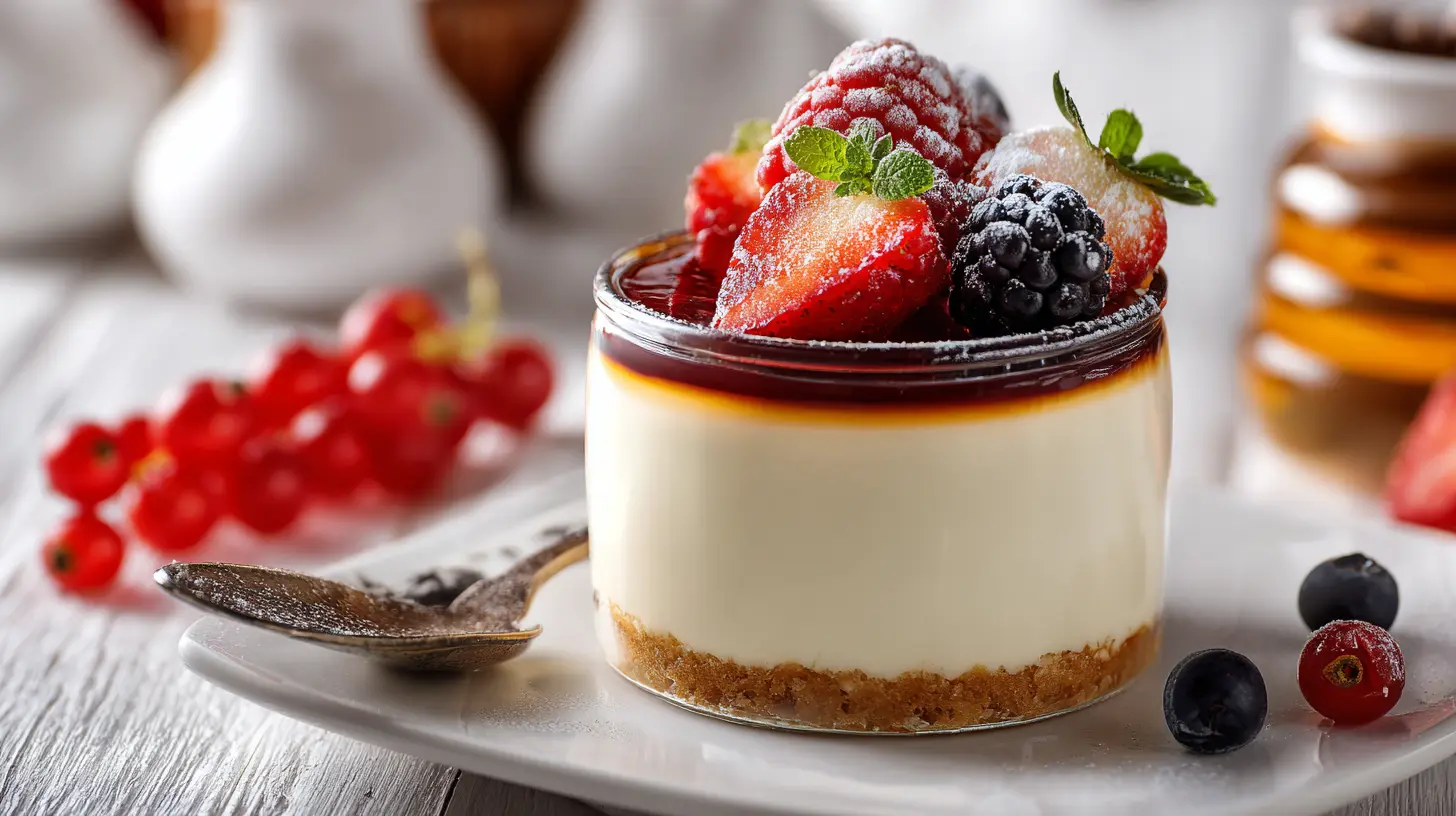
The glycemic index (GI) ranks carbohydrate-containing foods by how quickly they raise blood glucose compared with a reference food, usually glucose or white bread. A GI of 55 or below is generally considered low. The glycemic load (GL) goes further by factoring in portion size: GL equals the GI multiplied by the grams of available carbohydrate in a serving, divided by 100.This distinction matters more for dessert than for almost any other course. A food can have a low GI and still spike your glucose if you eat enough of it. Watermelon is a classic example in the opposite direction: high GI, low GL per typical serving. For desserts, the practical question is never "is this ingredient low-GI?" in isolation. It is "what is the glycemic load of the plate I am actually going to eat, and what else is on that plate?"
A dessert with a glycemic load under roughly 10 per serving is a reasonable target for most people aiming at stable energy. Between 11 and 19 is moderate. Above 20 in a single sitting is where you start to see the familiar pattern: a quick lift, a crash, and a craving for more.
Why Glycemic Response Is Only Part of the Story
Glycemic index is measured in a laboratory under standardized conditions, usually in isolation, on an empty stomach. Real life is messier. The same dessert eaten after a protein-rich meal produces a very different glucose curve than when eaten alone at 3 p.m. on an empty stomach. Fiber, fat, protein, food temperature, ripeness, processing, and even how well you chewed all shift the response.So treat GI values as a compass, not a GPS. They point you in the right direction. They do not tell you exactly where you will land.
The Physiology of a Stable Energy Curve
To design a dessert that sustains energy, you need a working model of what happens after you eat sugar.When carbohydrate is absorbed quickly, blood glucose rises sharply. The pancreas releases insulin to move glucose into cells. A large, fast rise tends to trigger a large insulin response, which can overshoot and push glucose below baseline within one to three hours. That dip is what people experience as the afternoon slump, irritability, or the urge to snack again. It is not a character flaw. It is a predictable hormonal consequence of a fast carbohydrate load.
Three levers slow that curve down:
1. Fiber. Soluble fiber forms a gel in the gut, slowing gastric emptying and glucose absorption. Insoluble fiber adds bulk and speeds transit, which is useful but less directly glucose-blunting.
2. Fat and protein. Both slow gastric emptying and modulate the incretin response, the gut hormone signaling that influences insulin release and satiety.
3. Food structure and processing. Whole nuts versus nut flour, intact berries versus juice, coarse flour versus fine flour. The more intact the cellular structure, the slower the release.
A low-glycemic dessert works by pulling at least two of these levers at once. A dessert that only swaps sugar for a low-GI sweetener but keeps everything else refined will still produce a faster curve than you might expect.
Ingredient Foundations That Earn Their Place
Flours and Starches
Not all flour behaves the same, and the differences are not marginal.- Almond flour is high in fat and protein, low in carbohydrate, and produces a dense, moist crumb. It browns quickly because of its fat content, so oven temperatures usually need to come down slightly.
- Coconut flour is extremely absorbent. It requires far more liquid and eggs than wheat flour, and substituting it one-for-one will ruin a recipe. Used correctly, it delivers high fiber and a naturally sweet aroma.
- Chickpea flour brings protein and a beany flavor that works in some contexts and clashes in others. It is excellent in savory-leaning desserts and flatbreads, less so in delicate vanilla cakes.
- Oat flour is moderate on the glycemic scale, especially when made from whole rolled oats. It is a good bridge flour for people who find almond and coconut flours too heavy.
- Resistant starch flours, such as green banana flour, behave differently again. Their starch is less digestible, which lowers the glycemic impact, but they can taste chalky if used past a certain proportion.
The trade-off is real. Almond flour desserts are satisfying and stable but calorie-dense and expensive. Oat flour is cheaper and more familiar but produces a faster curve. The right choice depends on what you are optimizing for.
Sweeteners
This is where most people make their first mistake. "Low-glycemic" does not mean "free." It also does not mean "healthy in unlimited quantities."- Erythritol has a very low glycemic impact and a clean taste, but it can cause digestive discomfort in larger amounts and has a noticeable cooling sensation that some people dislike in baked goods.
- Allulose behaves remarkably like sugar in baking, browns well, and has minimal glycemic effect. It is more expensive and less widely available.
- Monk fruit and stevia blends are potent and low-impact, but they carry a licorice-adjacent aftertaste that varies by brand and by the food they are used in.
- Coconut sugar and honey are often marketed as low-glycemic. They are not. They have a slightly lower GI than white sugar, but the difference is small enough that portion control matters far more than the swap itself.
- Dates and dried fruit are whole foods with fiber, but they are still concentrated sugar. They work in small amounts as a binding agent or flavor accent, not as a primary sweetener in large quantities.
A useful rule: use the smallest amount of sweetener that makes the dessert enjoyable, regardless of which sweetener you choose. The glycemic advantage of a low-impact sweetener disappears if you triple the quantity to compensate for a weaker flavor.
Fats and Proteins
Fat is not the enemy here. It is one of the most effective tools for flattening a glucose curve. Nut butters, tahini, olive oil, butter, coconut oil, and full-fat dairy all slow absorption and add satiety.Protein works similarly. Greek yogurt, ricotta, eggs, whey or plant protein powder, and nut flours all contribute. A dessert with 10 to 15 grams of protein per serving will almost always produce a gentler curve than one with 2 grams, even if the carbohydrate content is identical.
The trade-off is caloric density. A dessert loaded with nuts, nut butter, and full-fat dairy can easily exceed 400 calories per serving. That is not inherently bad, but it matters if your overall energy balance is a concern. Portion awareness does not go out the window just because the glycemic load is low.
Practical Formulas You Can Actually Use
Rather than memorizing recipes, learn the structural patterns. Once you understand them, you can adapt almost anything.The Nut-Butter Base
Combine a natural nut butter with a low-glycemic sweetener, a binding agent such as egg or flax, and a small amount of almond or coconut flour. Press into a pan or roll into bites. Chill to set.Why it works: the fat and protein from the nut butter dominate the macronutrient profile, and the small amount of flour provides just enough structure. The result is dense, satisfying, and slow to digest.
When it fails: if the nut butter is sweetened or hydrogenated, you lose much of the advantage. Read the label. The ingredient list should be nuts and salt, nothing else.
The Dairy and Berry Composition
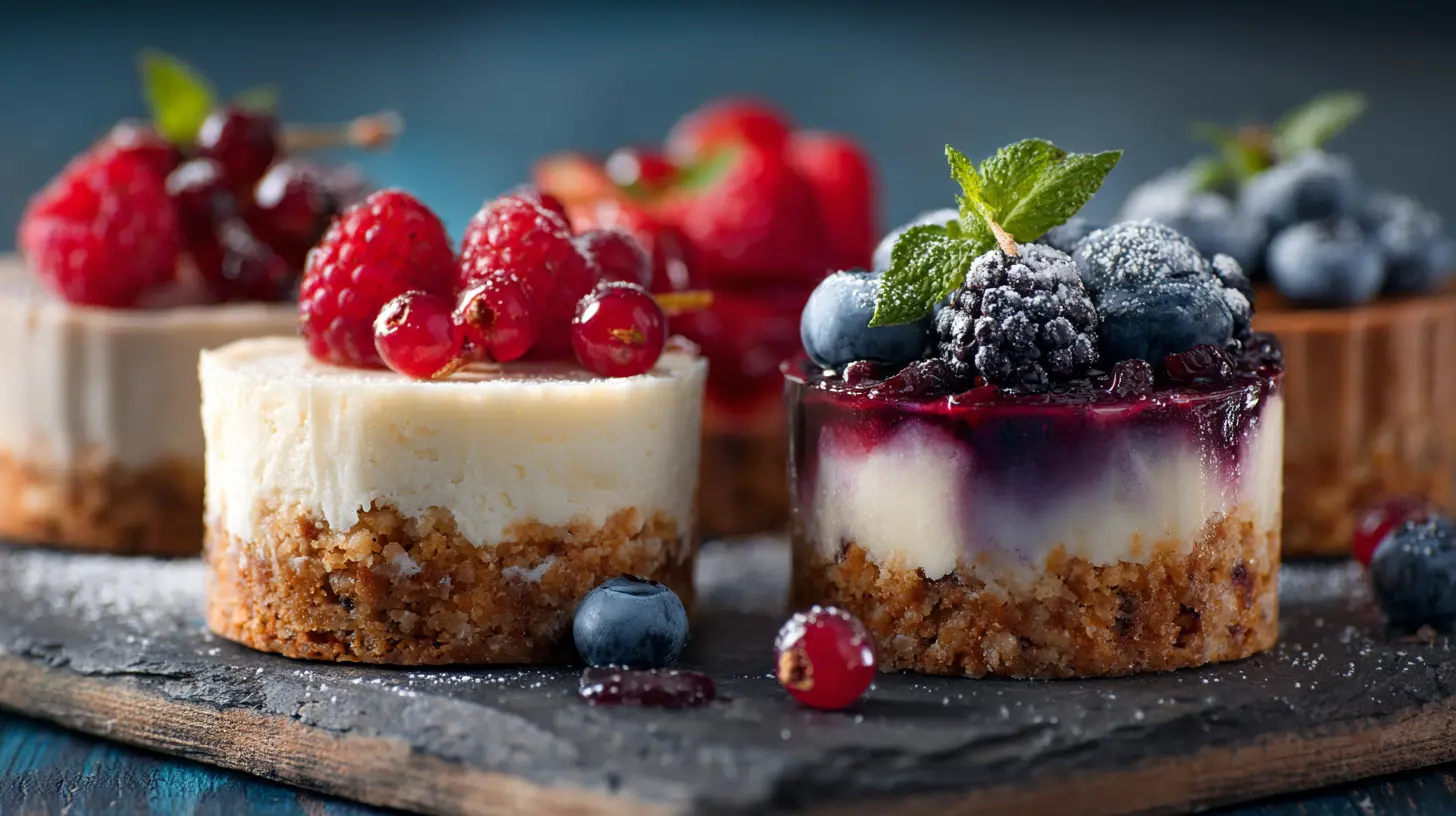
Layer full-fat Greek yogurt or ricotta with fresh berries, a small amount of low-glycemic sweetener, and a topping of toasted nuts or seeds.Why it works: protein from the dairy, fiber and polyphenols from the berries, and fat from the nuts create three separate slowing mechanisms. Berries are among the lowest-GI fruits, and their fiber content is meaningful per serving.
When it fails: if you use sweetened yogurt or fruit compote instead of whole fruit, you reintroduce fast carbohydrate. The difference between a handful of raspberries and a spoon of raspberry jam is substantial.
The Baked Custard Approach
Eggs, milk or a milk alternative, a low-glycemic sweetener, and flavoring. Baked in a water bath or gently steamed.Why it works: custards are almost entirely protein and fat with very little carbohydrate. They feel indulgent but behave like a protein snack. They are also forgiving for people who do not want to bake with alternative flours.
When it fails: overcooking turns custard rubbery, and undercooking leaves it loose. The technique matters more than the ingredients here.
The Chocolate and Nut Cluster
Melt a high-percentage dark chocolate with a small amount of coconut oil, stir in nuts and seeds, and drop onto parchment to set.Why it works: dark chocolate above 85 percent cocoa has relatively little sugar per serving, and the nuts add fat, protein, and fiber. The combination is satisfying in small portions.
When it fails: chocolate is calorie-dense and easy to overeat. Portion the clusters before you start eating them, not after.
Common Mistakes and Misconceptions
"Sugar-free means blood-sugar-safe"
Sugar alcohols and artificial sweeteners have minimal glycemic impact, but they are not automatically benign. Some cause digestive distress. Some, particularly in large amounts, may influence appetite regulation in ways that are still being studied. The honest position is that they are useful tools with trade-offs, not free passes."Low-GI means I can eat more"
This is the most common error. Glycemic load scales with portion. A low-GI dessert eaten in triple the serving size can deliver a higher glycemic load than a moderate-GI dessert eaten normally. Portion still governs."Fruit sugar is different"
Fructose does have a lower glycemic index than glucose because it is metabolized primarily in the liver rather than raising blood glucose directly. But that does not make large amounts of fruit sugar harmless. High intakes of fructose, especially from juice and concentrated sources, have their own metabolic considerations. Whole fruit in normal amounts is a different story from fruit juice concentrate."You need to eliminate dessert"
Elimination strategies tend to backfire. A dessert that fits your metabolic goals and that you genuinely enjoy is more sustainable than white-knuckling through cravings. The goal is not purity. It is a pattern you can keep."All alternative flours are interchangeable"
They are not, and treating them as such is the fastest route to a failed recipe. Almond flour, coconut flour, and oat flour have completely different absorption rates and fat contents. Substitution requires adjustment, not a one-to-one swap.
Timing, Context, and the Meal Around the Dessert
When you eat a dessert matters almost as much as what is in it.Eaten alone on an empty stomach, even a well-constructed low-glycemic dessert will produce a faster curve than the same dessert eaten after a meal containing protein, fat, and fiber. If your goal is stable energy through the afternoon, a dessert eaten as part of lunch will generally serve you better than one eaten at 4 p.m. in isolation.
Movement also matters. A short walk after eating improves glucose disposal by increasing muscle uptake independent of insulin. This is not a reason to earn your dessert through exercise. It is simply a reminder that the body handles carbohydrate better when it is moving.
Sleep and stress influence glucose tolerance too. On a night of poor sleep, the same dessert can produce a noticeably different response. This is not a reason to be rigid. It is a reason to be flexible and to notice patterns rather than treating any single reading as a verdict.
Comparing Approaches: Which Dessert Strategy Fits You
There is no single best low-glycemic dessert strategy. There are trade-offs.The whole-food approach uses dates, fruit, nuts, and minimal processing. It is nutrient-dense and satisfying, but it is not truly low-glycemic in large portions, and it requires more chewing and more mindfulness.
The alternative-flour approach uses almond, coconut, and chickpea flours with low-impact sweeteners. It produces familiar textures and reliable glucose curves, but it is expensive, requires technique, and can be calorie-dense.
The protein-forward approach leans on yogurt, custards, and nut-based compositions. It is the most reliable for stable energy and the easiest to portion, but it can feel repetitive and less celebratory.
The small-portion approach keeps conventional desserts but shrinks the serving and pairs them with protein and fat. It is the most socially flexible and the least restrictive, but it demands portion discipline and does not work equally well for everyone.
Most people do best with a blend. A protein-forward dessert on weekdays, a baked alternative-flour treat on weekends, and a small portion of something conventional at celebrations. The pattern matters more than any single choice.
What to Consider Before You Start
Before you overhaul your dessert habits, ask yourself a few questions.What is your actual goal? Stable energy, blood glucose management, weight, or simple enjoyment? The answer changes which trade-offs are worth making.
Do you have a medical condition that affects glucose regulation? If so, work with a clinician or dietitian rather than relying on general guidance. Individual responses vary widely, and continuous glucose monitoring, where available, can reveal patterns that population averages hide.
How much time and money are you willing to invest? Alternative flours and low-impact sweeteners are more expensive than conventional ingredients. If budget is tight, the small-portion approach with protein pairing may serve you better than an ingredient overhaul.
What will you actually eat? A dessert you dread is not a sustainable choice, no matter how good its glycemic profile. Enjoyment is a legitimate variable.
A Final Word on Stability
Stable energy is not a single dessert decision. It is the cumulative effect of how you eat across the day, how you sleep, how you move, and how much stress you carry. A low-glycemic dessert is one small lever among many. Used well, it removes one source of glucose volatility and replaces it with something you can genuinely look forward to.The most useful skill you can build is not memorizing glycemic index tables. It is learning to read a dessert's structure: what is providing the bulk, what is providing the sweetness, what is slowing absorption, and how much of it you are actually going to eat. Once you can see those four things, you can build a dessert for almost any occasion that keeps your energy where you want it.
all images in this post were generated using AI tools
Category:
Healthy DessertsAuthor:

Eileen Wood