Why Some Health Myths Seem So Believable
24 October 2026
Health myths do not survive because people are gullible. They survive because they fit the way human minds work. They borrow the language of science, attach themselves to real emotions, and offer simple answers to complicated questions. Understanding why they feel true is one of the most practical skills you can develop, because it changes how you read a headline, listen to a podcast, or evaluate advice from a friend.
This article looks at the machinery behind believable health myths. We will examine the psychology, the social forces, and the marketing tactics that keep them alive. More importantly, we will look at how to spot them without becoming cynical about all health information, since some unconventional advice turns out to be sound. The goal is not to distrust everything. The goal is to calibrate your trust.

The Brain Prefers a Good Story to a Careful Study
Human thinking did not evolve to process statistics. It evolved to process stories, faces, and immediate threats. A health myth that arrives wrapped in a personal story has a huge advantage over a dry research summary, even when the research is far more reliable.Consider how a myth spreads: "My neighbor started drinking celery juice every morning and her joint pain disappeared." This story is vivid, specific, and emotionally warm. It also contains several hidden problems. Her pain may have improved on its own. She may have changed other habits at the same time. She may be experiencing a placebo response, which is real and can be meaningful. None of that matters to the storytelling brain, which files the story away as evidence.
This is sometimes called the availability heuristic. We judge how likely something is by how easily examples come to mind. A dramatic story is easy to recall, so it feels common and true. A meta-analysis of forty studies is hard to recall, so it feels abstract and distant. The myth wins not because it is better supported but because it is easier to remember.
There is a useful practical takeaway here. When someone offers a personal success story as proof, you do not need to dismiss it. You can treat it as a hypothesis rather than a conclusion. Ask yourself: what else could explain this outcome? That single question defuses a large share of health misinformation.
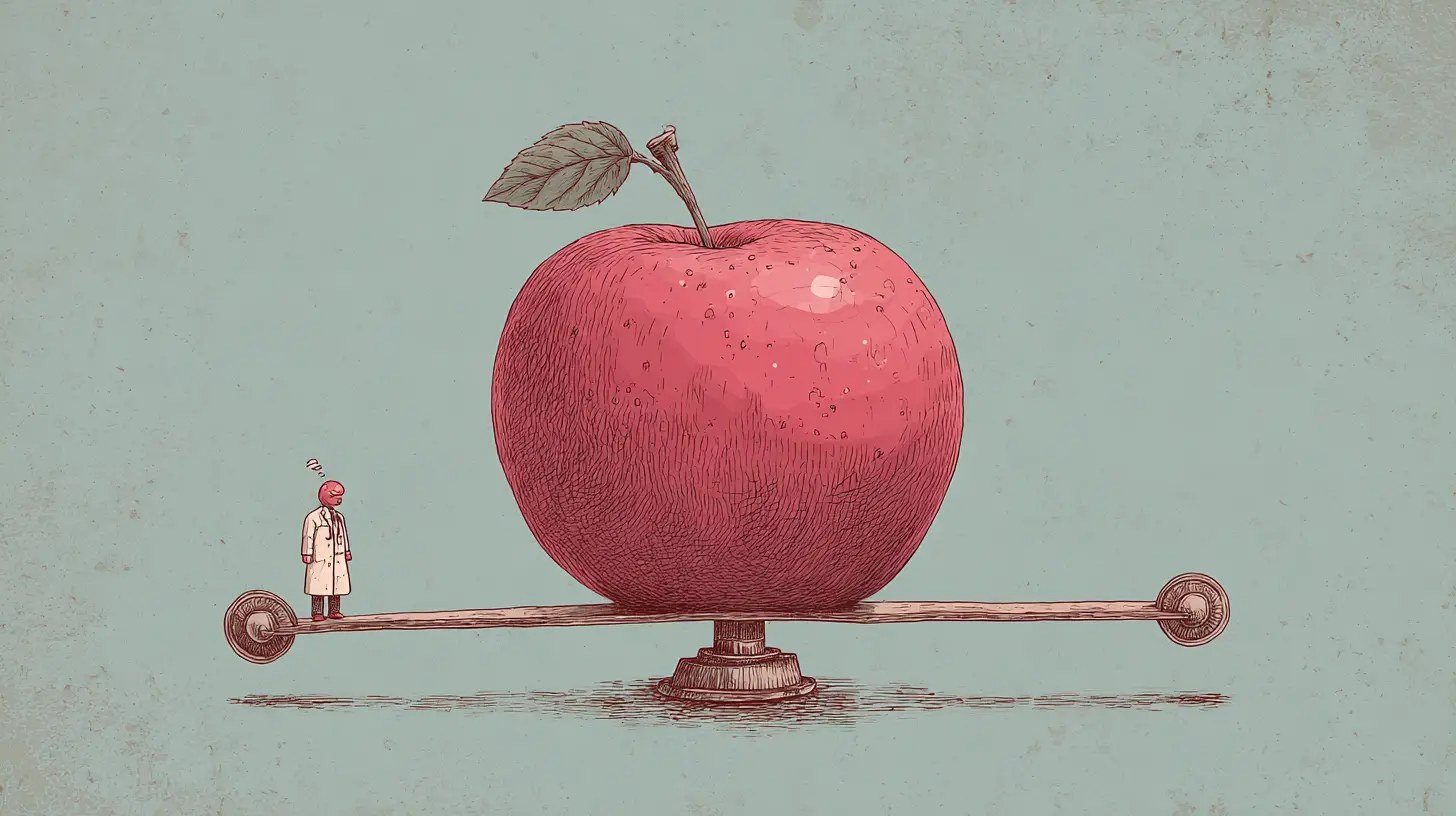
Why Simple Answers Feel More Trustworthy
Health is genuinely complicated. Chronic conditions usually have multiple causes, treatments work differently across populations, and even well-established advice comes with caveats. Complexity is honest, but it is also uncomfortable.Myths thrive on compression. "Sugar feeds cancer." "Seed oils cause inflammation." "Cold weather gives you a cold." Each of these compresses a messy reality into a clean cause-and-effect sentence. The sentence feels satisfying because it explains something frightening with something controllable.
This connects to a well-documented cognitive bias called the illusion of explanatory depth. People often feel they understand a topic much better than they actually do, until they try to explain the mechanism in detail. A myth like "detox your liver with tea" sounds coherent until you ask what toxin is being removed, how the tea identifies it, and why the liver, an organ built for exactly this job, needs help from a beverage.
A good test for any health claim is to ask for the mechanism. Not the outcome, the mechanism. How does this supposedly work? What pathway, what dose, what timeline? Myths tend to collapse at this stage because they were built for emotional resonance, not for mechanical accuracy. Legitimate science may also struggle to explain a mechanism fully, but it usually can describe one, and it usually admits what it does not know.

The Authority Borrowing Problem
Many health myths borrow credibility rather than earn it. They use words that sound scientific, cite a doctor without naming one, or reference a study without a citation. This is not always deliberate deception. Sometimes the person sharing the myth genuinely believes it and is repeating something they heard from a source that sounded authoritative.Watch for these patterns:
- Vague expertise. "Scientists say" or "doctors recommend" without a name, institution, or date.
- Single-study certainty. One small study becomes "research proves" in the retelling, ignoring that most single studies are later revised or contradicted.
- Mechanism overreach. A finding in cells in a lab dish gets presented as if it applies to a living human taking a supplement.
- Appeals to ancient wisdom. Traditional practice can contain real insight, but antiquity is not evidence of safety or effectiveness. Some traditional remedies work, some are harmless, and some are dangerous.
- The suppressed truth narrative. "They do not want you to know this." This framing is seductive because it turns skepticism into loyalty. It also makes the claim unfalsifiable, since any contradicting evidence becomes part of the cover-up.
None of these signals automatically makes a claim false. They simply mean the claim has not yet earned your trust. The burden of proof belongs to the person making the assertion, not to you.

Real Mechanisms, Distorted Conclusions
Some of the most persistent myths contain a grain of truth that has been stretched past its breaking point. This is why they feel believable: they are not pure fiction. They are distortions, and distortions are harder to spot than fabrications.Take the idea that eating fat makes you fat. Dietary fat is calorie-dense, and excess calories contribute to weight gain, so the claim has a logical seed. But it ignores that protein and carbohydrates can also contribute to excess calories, that fat quality matters enormously for cardiovascular health, and that the body regulates energy through complex hormonal and behavioral systems. The seed of truth grew into an oversimplified rule that shaped public health advice for years and arguably made some people less healthy, not more.
Or consider the belief that you must drink eight glasses of water a day. The human body does need water, and dehydration is real. But the specific number has no strong scientific basis, and it ignores that food contributes substantially to fluid intake and that needs vary widely with body size, climate, activity, and health status. The myth persists because it is easy to follow, feels virtuous, and carries no obvious risk for most healthy people.
The lesson is that a plausible mechanism is not proof of a meaningful effect. Many things are biologically plausible and still do not produce a clinically relevant benefit at real-world doses. The distance between "this could theoretically work" and "this works in people" is where most health myths quietly fall apart.
The Role of Fear and the Desire for Control
Fear is one of the strongest forces in health communication, and myths are often fear-shaped. When people feel threatened by something they cannot control, such as cancer, dementia, or autoimmune disease, they reach for actions that restore a sense of agency. A supplement, a diet, a morning routine. The action itself may do little, but the feeling of doing something is powerful.This is why myths often cluster around the most frightening conditions. It is also why they often promise control through purity, such as avoiding "toxins," eating "clean," or eliminating entire food groups. Purity narratives are emotionally satisfying because they divide the world into safe and unsafe, which is far easier to live with than uncertainty.
There is a real trade-off here that deserves honest acknowledgment. Some people find that a structured health routine reduces anxiety and improves their overall wellbeing, even if the specific intervention is not doing what they think it is doing. That benefit is not nothing. But it becomes a problem when the routine replaces proven care, costs significant money, or causes harm through restriction, delay, or interaction with medication.
A balanced approach is to ask two separate questions. First, is this likely to help? Second, is it likely to hurt, directly or by displacing something better? A harmless ritual that supports a healthy lifestyle is fine. A ritual that delays a diagnosis is not.
Social Proof and the Pull of the Group
Humans are social learners. We copy what people around us do, especially people we trust and admire. This is efficient most of the time, but it means health beliefs spread through communities the way accents and recipes do.Social proof works in several ways. If many people in your circle take a particular supplement, it starts to feel normal and safe. If a respected friend recommends a diet, questioning it feels socially costly. If an entire online community shares a belief, disagreement can feel like rejection.
This dynamic is amplified by algorithms that show you more of what you already engage with. A person who clicks on one article about a fringe health topic may soon see a feed dominated by similar content, creating the impression that a minority view is actually mainstream. The feeling of consensus is real to the person experiencing it, even when the consensus is an artifact of recommendation systems.
One practical countermeasure is to deliberately diversify your information sources. Follow health professionals who disagree with each other respectfully. Read the original source when a claim cites research. Notice when your sense of "everyone knows this" comes from a single platform rather than from a broad base of evidence.
The Confidence Trap
Myths often arrive with more confidence than accurate information does. This is not a coincidence. Honest experts hedge because they understand uncertainty. They say "the evidence suggests," "in most cases," and "we need more research." That hedging is a sign of care, but it reads as weakness to an audience looking for clarity.Confident claims feel more credible, a phenomenon sometimes called the confidence heuristic. A person who states something boldly, without hesitation, signals certainty, and our brains often interpret certainty as competence. This is a known vulnerability, and it is exploited in marketing, politics, and health content alike.
The result is a strange inversion. The most reliable advice can sound the most tentative, while the least reliable advice can sound the most assured. This does not mean you should distrust all confident people or trust all cautious ones. It means you should evaluate the evidence behind the confidence rather than the confidence itself.
A useful question: does this person ever say "I do not know"? Experts who never express uncertainty about complex health topics are either oversimplifying for effect or overestimating their own knowledge. Both are reasons for caution.
Why Myths Resist Correction
Even when people are shown clear evidence that a belief is wrong, the belief often persists. This is sometimes called the backfire effect, though the research on how common it is remains debated. What is better established is that correction is difficult when a belief is tied to identity, emotion, or repeated exposure.Repetition is a major factor. The illusion of truth effect describes the finding that people rate statements as more likely to be true after hearing them multiple times, even when they were told the statements were false. Familiarity breeds believability. This is why myths that circulate widely for years become almost impossible to dislodge. They simply feel true because they are familiar.
Correction also threatens something deeper. If a person has built part of their identity around a health belief, admitting error can feel like admitting they were foolish or that they let down their family. The belief becomes protected not by evidence but by self-image. This is why shaming people out of health myths rarely works and often makes things worse.
A more effective approach, both for yourself and for others, is to separate the person from the belief. Instead of "you are wrong," try "here is how I think about it, and here is what changed my mind." Offer a better explanation rather than just negating a bad one. People need somewhere to go, not just a door closing.
Practical Strategies for Evaluating Health Claims
You do not need a medical degree to evaluate most health claims, but you do need a repeatable process. Here is one that works well in everyday life.Ask What the Claim Is Actually Saying
Many claims are vague enough to be unfalsifiable. "Supports immune health" could mean almost anything. Push for specifics. What outcome, in what population, over what timeframe, at what dose? A claim that cannot be pinned down cannot be tested, and a claim that cannot be tested should not be trusted.Check the Source and the Incentive
Who is making the claim, and what do they gain if you believe it? A supplement company, a wellness influencer selling a course, and a researcher publishing in a peer-reviewed journal all have different incentives. Incentives do not automatically make a claim false, but they are relevant context.Look for the Consensus, Not the Outlier
Individual studies can be wrong, and so can individual experts. What matters more is the weight of evidence across many studies and the general agreement among qualified professionals. Consensus can be wrong too, and it has been before, but it is a better starting point than a single dramatic finding.Distinguish Correlation From Causation
People who take vitamins may be healthier than people who do not, but that does not mean the vitamins made them healthier. They may already have healthier diets, more income, or more time for self-care. This is one of the most common errors in health reasoning, and it underlies a huge share of myths.Consider the Dose and the Context
Many substances are beneficial in small amounts and harmful in large ones. Water is essential and also potentially fatal in extreme excess. Sunlight supports vitamin D production and also damages skin. Context matters, and any claim that ignores dose, timing, and individual variation is probably oversimplified.Watch for the Single Cause Fallacy
Chronic diseases rarely have a single cause. Claims that one food, one supplement, or one habit is the root of a complex condition are almost always incomplete. The body is a system, and systems resist simple explanations.
When Unconventional Advice Deserves a Fair Hearing
It would be a mistake to equate "unconventional" with "false." Some practices that once seemed fringe are now mainstream, and some mainstream advice has been revised in light of new evidence. The history of medicine includes genuine corrections, and skepticism toward authority has sometimes been justified.The key distinction is between unconventional claims that invite scrutiny and those that resist it. A claim worth taking seriously will usually have a clear mechanism, some supporting evidence, and a willingness to be tested. It will acknowledge its limits. It will not rely on secrecy, urgency, or the claim that everyone else is lying.
If you encounter an unconventional idea that seems promising, the responsible approach is to discuss it with a qualified clinician who knows your health history. Some alternative practices can interact with medications, affect blood sugar, or interfere with treatment. A conversation costs little and can prevent real harm.
Building a More Resilient Relationship With Health Information
The goal is not to become a full-time skeptic. Constant doubt is exhausting and can lead to its own problems, including ignoring good advice because it sounds too simple or too familiar. The goal is to develop a calibrated trust that matches the quality of the evidence.A few habits help:
- Slow down before sharing. A few seconds of reflection prevents most misinformation spread.
- Prefer sources that show their work. Citations, named authors, and transparent methods are good signs.
- Accept uncertainty as normal. Health science is a moving target, and that is a feature, not a bug.
- Revisit your own beliefs. Ask yourself which of your health habits are based on evidence and which are based on habit or hope. Both categories can coexist, but knowing the difference matters.
- Talk to real clinicians about real questions. The internet is good at general information and bad at personal medical advice.
Health myths seem believable because they are built from the raw materials of human psychology: story, simplicity, confidence, fear, belonging, and repetition. Understanding those materials does not make you immune, but it makes you harder to fool and more capable of finding advice that actually helps. That is a skill worth building, one claim at a time.
all images in this post were generated using AI tools
Category:
Health MythsAuthor:

Eileen Wood

