Pairing Nature and Walking for Maximum Stress Relief
13 October 2026
Stress is not a character flaw. It is a physiological state. Your body releases cortisol and adrenaline, your heart rate climbs, your muscles tense, and your mind narrows its focus onto whatever feels threatening. That response is useful when the threat is real and short-lived. It becomes destructive when it never fully switches off.
Two interventions have strong track records for helping that switch happen: walking and time in nature. Most people treat them as separate habits. Walk for exercise. Go outside for fresh air. But when you combine them deliberately, the effect is greater than either one alone. This article explains why that combination works, how to structure it, what to avoid, and how to adapt it to real life.

Why Walking Changes Your Stress Chemistry
Walking is one of the few forms of movement that almost anyone can do, almost anywhere, without equipment or instruction. That accessibility matters, but the stress-relief mechanism goes deeper than convenience.The rhythm effect
Walking is rhythmic and repetitive. Your feet strike the ground in a steady cadence, your arms swing, your breathing settles into a pattern. This kind of bilateral, repetitive movement appears to calm the nervous system. Researchers who study rhythmic movement suggest that it engages the brain in a way that reduces rumination, the loop of repetitive negative thinking that keeps stress alive long after the triggering event has passed.Think about what happens when you sit still and try to stop worrying. It rarely works. The mind needs something to do. Walking gives it a low-demand task that occupies just enough attention to loosen the grip of anxious thoughts, without requiring the concentration that would make the walk feel like work.
Circulation and cortisol
Moderate walking improves blood flow, including to the brain. It also appears to help regulate cortisol. This does not mean a single walk erases chronic stress. It means that regular walking gives your body more chances to return to baseline. Over weeks, that pattern can shift how reactive you are to daily stressors.The intensity matters here. A gentle to moderate pace tends to be better for stress relief than a hard, breathless effort. High-intensity exercise has its own benefits, but it also raises stress hormones temporarily. If your goal is calming rather than conditioning, you want a pace where you can breathe through your nose and hold a conversation without strain.
Why the walk does not need to be long
There is a persistent belief that meaningful exercise requires an hour or more. For stress relief, that bar is too high and often counterproductive. Short walks count. A fifteen-minute walk after a difficult meeting can do more for your state of mind than a planned ninety-minute session you keep postponing because it feels too demanding.
Why Nature Adds Something Walking Alone Cannot
If walking were the whole story, a treadmill in a basement would work equally well. It does not, at least not for most people. The environment is not a neutral backdrop. It is part of the intervention.Attention restoration
One of the most useful frameworks for understanding nature's effect is attention restoration theory. The idea is that directed attention, the kind you use to focus on tasks, emails, and decisions, is a limited resource that depletes with use. Natural environments tend to hold what researchers call soft fascination. Leaves move, light shifts, water flows. These things capture your attention gently, without demanding effort.That is the opposite of a screen, a traffic jam, or a crowded office. Those environments demand hard, directed attention and deplete you further. A walk in a park lets your directed attention rest while your senses stay engaged. When you return to work, you are not just calmer. You are often sharper.
Sensory load and the quieting of threat
Natural settings also tend to reduce sensory threat. City streets require constant low-level vigilance: cars, cyclists, crowds, noise. Your nervous system stays partly on guard. A trail or a quiet park removes most of those demands. Your peripheral vision relaxes, your shoulders drop, and your breathing slows without you consciously trying.This is why the setting matters as much as the step count. A walk along a busy road with traffic noise may still help, but it delivers a fraction of the benefit. The same effort in a greener, quieter place pays more.
Light and circadian rhythm
Morning and midday natural light is far brighter than indoor lighting. Exposure to that light helps anchor your circadian rhythm, which in turn affects sleep, mood, and stress resilience. If you walk outside in the morning, you are doing two things at once: moving your body and signaling to your brain that the day has begun. People with irregular sleep often find that a consistent morning outdoor walk stabilizes their nights within a couple of weeks.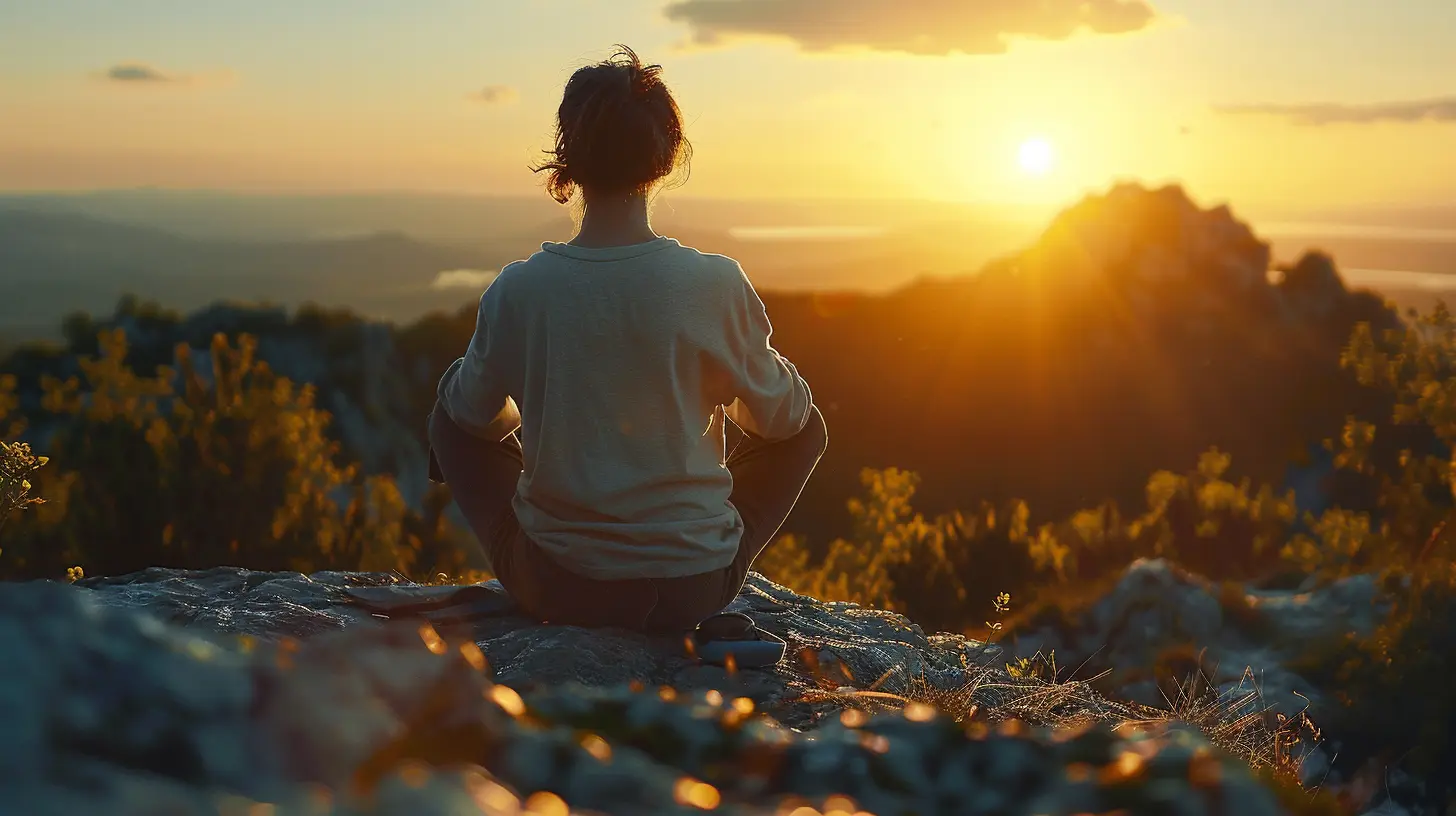
Why the Combination Outperforms Either Alone
You can walk indoors. You can sit outside. Neither is as effective as walking outside. Here is the reasoning.- Walking provides the physiological trigger for calming: rhythmic movement, circulation, cortisol regulation.
- Nature provides the cognitive and sensory conditions that let that calming take hold: soft fascination, reduced threat load, restorative light.
- Each one removes a barrier that limits the other. Walking without nature leaves you in a depleting environment. Nature without walking leaves you sedentary and often restless.
There is also a practical synergy. Nature makes walking more appealing, so you do it more often. Walking makes nature accessible, because you can reach a park, a tree-lined street, or a waterfront on foot without planning a trip. The combination is self-reinforcing in a way that neither habit is on its own.

How to Structure a Walk for Stress Relief
Not all walks are equal. A walk that is rushed, phone-dominated, or overly ambitious can add stress rather than reduce it. Use the following principles as a guide.Duration
Aim for twenty to forty minutes as a default. Shorter walks are still valuable, especially on high-stress days. Longer walks are fine if they feel good, but do not treat length as the goal. Consistency beats duration.Pace
Choose a pace that feels sustainable and slightly brisk but not straining. You should be able to speak in full sentences. If you are gasping, you are past the stress-relief zone and into training territory.Timing
Morning walks support circadian rhythm and set a calm tone for the day. Midday walks break up accumulated tension. Evening walks can help you transition out of work mode, though bright light close to bedtime may interfere with sleep for some people. Experiment and notice what works for you.Route
Prioritize greenery, quiet, and variety. A loop with gentle changes in scenery holds attention better than a straight, monotonous path. If you live in a city, look for parks, canals, cemeteries, university campuses, or residential streets with mature trees. Even a modest green space outperforms a busy road.Attention
This is the part most people skip. The way you direct your attention during the walk changes its effect.- Leave the phone in your pocket unless you need it for safety.
- Resist the urge to listen to a podcast or take calls if your goal is stress relief.
- Let your gaze rest on distant things rather than the ground in front of you.
- Notice sounds, temperature, and the movement of air without trying to analyze them.
If your mind starts solving problems, that is normal. Acknowledge it and return your attention to what you see and hear. This is not meditation in the strict sense, but it borrows the same mechanism: gentle, repeated redirection.
Common Mistakes That Undermine the Benefit
Awareness of these pitfalls can save you months of ineffective effort.Treating the walk as another performance metric
Tracking steps, pace, and distance can motivate some people and burden others. If you find yourself anxious about hitting a number, drop the tracking for a while. The goal is regulation, not achievement.Multitasking
Answering emails, taking calls, or scrolling during a walk splits your attention and keeps your nervous system in work mode. You get the physical movement but lose most of the cognitive restoration.Choosing the wrong environment
A walk on a noisy, polluted road is better than no walk, but it is not equivalent to a green, quiet route. If you have a choice, take it. If you do not, consider whether a short trip to a better location once or twice a week is feasible.Going too hard
Pushing into high-intensity effort when you are already stressed can backfire. Save hard workouts for days when your baseline is steadier, or separate them from your stress-relief walks.Skipping the walk when stress is highest
This is the most common mistake. When stress peaks, the walk feels like one more obligation. In reality, that is when it helps most. Lower the bar rather than skipping it. Ten minutes outside is not a failure. It is the intervention.
Adapting the Practice to Different Lives
There is no single correct version of this practice. Consider these variations and their trade-offs.Urban dwellers with limited green space
Options include parks, riverside paths, botanical gardens, and quieter residential streets. Some people use cemeteries, which are often green, quiet, and underused. The trade-off is travel time. A fifteen-minute walk to reach a park may be worth it if the park itself is restorative.People with mobility limits
Walking does not have to mean striding. A slow, supported walk with a cane, walker, or companion still delivers rhythmic movement and outdoor exposure. Seated time outdoors, while not equivalent, still provides light and sensory restoration. Combine what you can.Parents with young children
A stroller walk can work well. The rhythm soothes both adult and child. Choose routes with low traffic and interesting things to look at. Do not expect deep introspection. Expect movement and light, which is enough.Cold or hot climates
Layering, timing, and route choice matter more than willpower. In extreme heat, walk early. In cold, walk midday and dress in layers. If weather truly prevents outdoor walks, consider indoor walking near a bright window as a partial substitute, and return outside as soon as conditions allow.Night shift workers
Circadian advice assumes a daytime schedule. If you work nights, aim for outdoor walks during your personal morning, whenever that falls, and manage light exposure deliberately. The principles hold; the clock times shift.What the Evidence Supports and What It Does Not
It is worth being honest about the limits of what we know.- Walking and nature exposure are both associated with reduced stress, improved mood, and better sleep in many studies. The direction of the effect is consistent.
- The exact mechanisms are still debated. Attention restoration, cortisol regulation, circadian effects, and social contact all likely contribute.
- Individual responses vary. Some people feel a strong effect from a short walk. Others need longer or more frequent exposure. Genetics, temperament, and life circumstances all play a role.
- Nature is not a substitute for treatment. If you have clinical anxiety, depression, or a stress-related medical condition, walking outdoors can support your treatment but should not replace professional care.
This is not a reason to dismiss the practice. It is a reason to approach it as one reliable tool among several, not a cure.
Building the Habit Without Adding Stress
The irony of stress-relief habits is that they can become another source of pressure. Here is how to avoid that.Attach the walk to something you already do
Habit stacking works because it removes the need for a decision. Walk after your morning coffee. Walk when you finish work. Walk before dinner. The trigger does the remembering for you.Lower the minimum
Define a version so small it feels almost silly. Five minutes around the block. One loop of the park. This protects the habit on hard days and keeps the identity intact: I am a person who walks outside.Allow variation
Some days you will want a long, quiet walk. Other days a short, brisk one. Both count. Rigidity breeds abandonment.Protect the walk from optimization
Do not turn it into a training program, a productivity hack, or a content opportunity. Let it be ordinary. The ordinariness is part of what makes it restorative.A Simple Weekly Template
If you want a starting structure, try this and adjust.- Three to five days: a twenty to thirty minute walk in the greenest, quietest place you can reach, phone away.
- One or two days: a shorter ten to fifteen minute walk, especially on high-stress days.
- Once a week if possible: a longer walk of forty-five to sixty minutes in a larger natural area, such as a trail, a large park, or a waterfront.
Notice how you feel after each type. Most people find that the longer nature walk produces the deepest reset, while the short daily walks maintain a steadier baseline. Both matter.
Final Thoughts
Stress relief is not about finding one perfect solution. It is about building a set of reliable practices that help your nervous system return to baseline. Walking and nature are two of the most accessible and well-supported options available. Combined, they address both the body and the mind: movement regulates physiology, and natural settings restore attention and reduce sensory threat.You do not need special equipment, a gym membership, or a remote wilderness. You need a pair of shoes, a route with some green and some quiet, and the willingness to leave your phone alone for twenty minutes. Start smaller than you think you should. Do it more often than feels impressive. Over time, the accumulation of those ordinary walks becomes one of the most dependable tools you have.
all images in this post were generated using AI tools
Category:
Walking For HealthAuthor:

Eileen Wood