How to Track Your Walking Progress for Optimal Health
28 October 2026
Walking is the most accessible form of exercise on the planet. You do not need a gym membership, special equipment, or a complicated schedule. You just need a pair of shoes and a few minutes. But here is the problem: most people walk without any sense of whether it is actually doing anything for them. They log steps because their phone tells them to, hit some arbitrary number, and assume that means they are healthy.
That assumption is where progress stalls.
Tracking your walking is not about obsessing over numbers. It is about turning a passive habit into a deliberate practice. When done correctly, tracking gives you feedback, accountability, and a clear picture of how your daily movement connects to how you feel, sleep, and function. When done poorly, it becomes a source of anxiety or a meaningless data dump.
This guide is about doing it correctly. It covers what to measure, how to measure it, what the numbers actually mean, and how to adjust your approach based on your goals, your body, and your life.

Why Walking Progress Deserves Real Tracking
Walking is deceptive. It feels easy, so people assume it requires no thought. But the health benefits of walking are dose-dependent. More walking, up to a point, generally produces better outcomes for cardiovascular health, blood sugar regulation, mood, and joint function. The key phrase is "up to a point," and finding that point requires measurement.There is also a psychological mechanism at work. What gets measured gets repeated. When you track something, you notice it. When you notice it, you make small decisions that support it. That is why step counters work for some people and fail for others. The counter itself is neutral. The difference is whether the person uses the data to make decisions or just collects it like digital clutter.
Tracking also protects you from a common trap: the illusion of consistency. Many people believe they walk more than they do. They remember the long weekend hike and forget the four sedentary weekdays. Objective data corrects that memory bias, and that correction is often the first step toward real improvement.

What to Track Beyond Step Count
Step count is the default metric because it is easy to capture. But it is a blunt instrument. Two people can both walk 8,000 steps and have very different health outcomes depending on pace, terrain, consistency, and the rest of their lifestyle. If you want optimal health, you need a richer picture.Step Volume
This is your baseline. Total steps per day gives you a rough measure of overall movement. It is useful for establishing a floor, a minimum you commit to regardless of circumstances. For many adults, a reasonable starting target is somewhere in the 7,000 to 10,000 range, but the right number depends on your current baseline, age, and health status. The best target is one that is meaningfully higher than where you are now and sustainable over months, not days.Walking Intensity
Not all steps are equal. A slow shuffle around the office burns fewer calories and provides less cardiovascular stimulus than a brisk walk at a pace where conversation becomes slightly challenging. Tracking intensity means paying attention to pace. Some devices estimate this through cadence, heart rate, or active minutes. You can also do it manually by noting how many of your daily steps were taken at a purposeful pace versus incidental movement.The distinction matters because moderate-intensity walking is where many of the cardiovascular and metabolic benefits concentrate. If all your steps are slow, you may be meeting a volume target while missing the intensity stimulus your body needs.
Duration and Frequency
How long you walk in a single session and how often you walk matter. A 45-minute continuous walk produces different physiological adaptations than the same number of steps scattered across a day in two-minute bursts. Both have value. Short bouts help with blood sugar control after meals and break up sedentary time. Longer sessions build aerobic capacity and endurance. Tracking duration and frequency helps you see which pattern you are actually following.Consistency
This is the most underrated metric. A person who walks 6,000 steps every single day is often better off than someone who walks 15,000 steps twice a week and sits the rest of the time. Consistency drives adaptation. The body responds to repeated stimulus, not occasional heroics. Tracking streaks, weekly averages, or the number of active days per week gives you a clearer view of consistency than any single-day number.How You Feel
Subjective data is data. Energy levels, mood, sleep quality, joint comfort, and stress all respond to walking. A simple daily note, even a one-to-ten rating on energy and mood, can reveal patterns that step counts miss. You might find that your best sleep happens on days you walk outside in the morning, or that your knees complain when you push past a certain distance on hard surfaces. That kind of insight is invisible in a step log alone.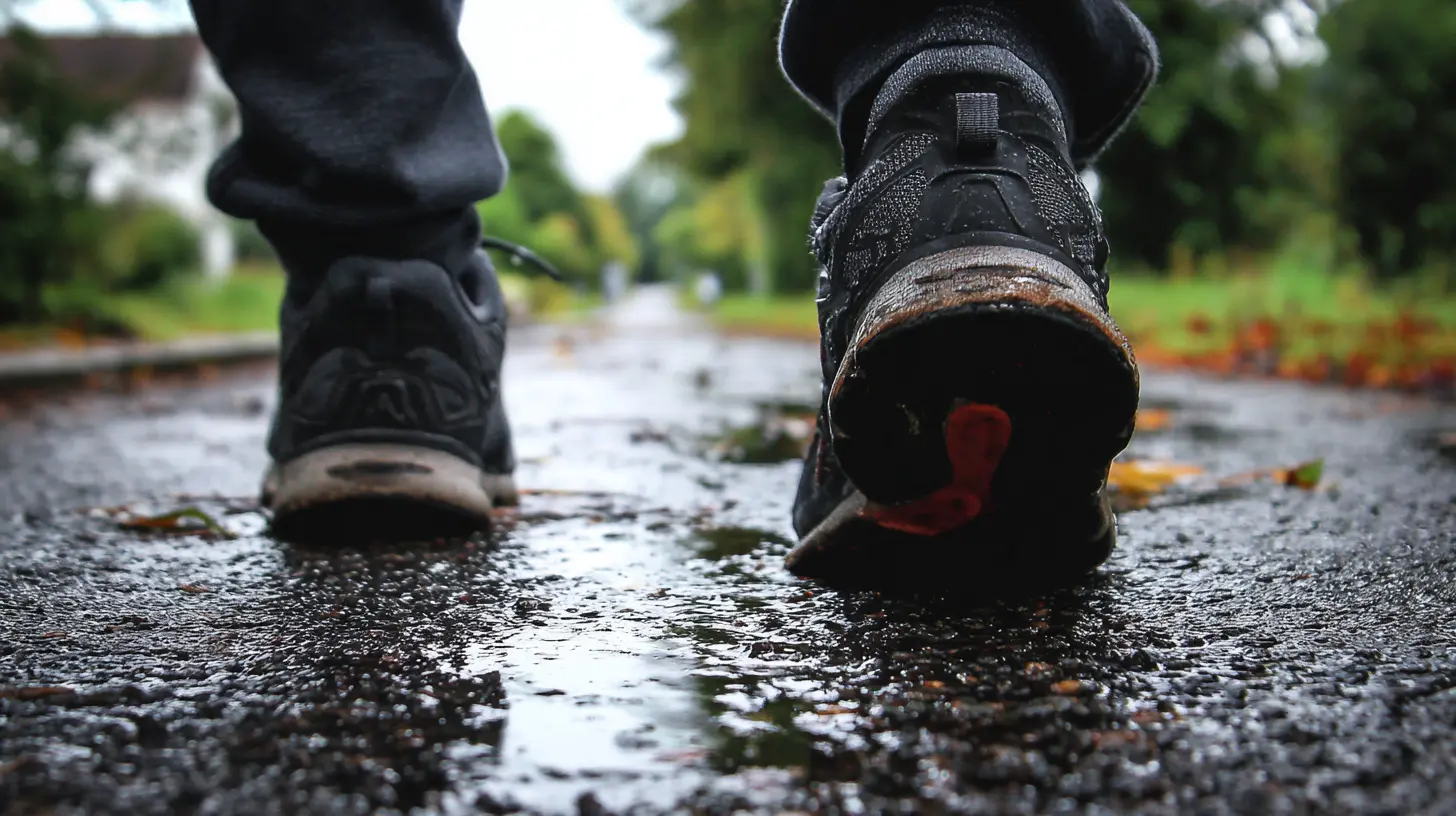
Choosing the Right Tracking Tools
The market is crowded, and the best tool is the one you will actually use consistently. Here is an honest comparison of the main options.Smartphones
Most smartphones track steps automatically through built-in health apps. The advantage is zero friction. You already carry the phone. The disadvantage is accuracy. Phones miss steps when you leave them on a desk or in a bag, and they can overcount when you are doing other activities that involve arm movement. For general awareness, a phone is fine. For precise tracking, it has limits.Dedicated Fitness Trackers and Smartwatches
These devices sit on your wrist, which improves step accuracy and adds metrics like heart rate, cadence, and active minutes. They also provide the nudge effect: seeing your progress on your wrist throughout the day influences behavior. The trade-off is cost and the risk of data overload. More metrics do not automatically mean better decisions. Pick two or three metrics that matter to you and ignore the rest.Pedometers
Simple clip-on or pocket pedometers are inexpensive and do one thing well: count steps. They lack the ecosystem of a smartwatch, but they also lack the distractions. For someone who wants a clean, single-metric approach, a basic pedometer is a legitimate choice. Accuracy varies by model, so read reviews before buying.Manual Logs
A notebook or a simple spreadsheet works surprisingly well. You record your walk duration, distance, and how you felt. The act of writing creates awareness that automatic tracking sometimes does not. Manual logging is also flexible. You can capture context that devices miss, like weather, terrain, or whether you walked with a friend. The downside is that it requires discipline, and many people abandon it within a few weeks.GPS Apps
Apps that use GPS to map your route and measure distance are excellent for outdoor walks. They capture pace, elevation, and route history. They are less useful for indoor walking or short incidental movement. If your primary walking is structured outdoor sessions, a GPS app gives you rich data. If your walking is mostly around the house and office, it is the wrong tool.A practical approach for most people: use a wearable or phone for automatic step and intensity tracking, and add a brief manual note for subjective experience. That combination covers the objective and the personal without creating a second job.

Setting Targets That Actually Make Sense
The most common mistake in walking tracking is adopting someone else's number. The 10,000-step target is a marketing artifact, not a scientific law. It originated from a Japanese pedometer campaign in the 1960s and stuck because it is memorable. It is not a bad target, but it is not a universal one either.A better approach is to set targets in layers.
Layer One: Your Baseline Floor
Track your current average for one to two weeks without changing anything. This is your honest starting point. Then set a floor slightly above it, perhaps 10 to 20 percent higher. This becomes your non-negotiable minimum. The floor protects you on busy days when a long walk is not possible.Layer Two: Your Stretch Target
This is the number you aim for on most days. It should be ambitious but achievable without disrupting your life. If your baseline is 5,000 steps, a stretch target of 8,000 is reasonable. Jumping to 15,000 overnight is a recipe for burnout or injury.Layer Three: Your Intensity Goal
Decide how many minutes of brisk walking you want per week. Many public health guidelines suggest around 150 minutes of moderate-intensity activity weekly, and walking briskly counts. You can distribute that across the week however fits your schedule. Tracking intensity minutes separately from total steps keeps you honest about quality, not just quantity.Layer Four: Your Consistency Goal
Choose a number of active days per week. Five is a common and practical target. The specific number matters less than the commitment. Consistency goals keep you from letting one missed day become a missed week.Review these targets every four to six weeks. As your fitness improves, your baseline rises, and your targets should rise with it. Static targets become stale and stop driving progress.
Reading the Data Without Letting It Run Your Life
Tracking is a tool, not a verdict. The moment your step count starts dictating your self-worth, the tool has become a problem. Here is how to keep the data in its proper place.Look at trends, not single days. One low day means nothing. A low week is worth noticing. A low month is worth addressing. Zoom out.
Compare like with like. Weekends and weekdays often look different. Weather affects walking. Travel disrupts routines. When you evaluate your progress, compare similar periods so you are not measuring noise.
Use data to ask better questions. If your step count dropped, ask why. Was it a busy work week? Poor sleep? Sore knee? The number is the start of the inquiry, not the end of it.
Watch for the compensation trap. Some people unconsciously move less after a tracked walk because they feel they have "earned" rest. Tracking can expose this pattern if you look at your full-day movement, not just your workout.
Ignore metrics that do not change your behavior. If a metric never influences a decision you make, stop looking at it. Data you do not act on is just noise.
Common Mistakes and Misconceptions
Several myths and habits sabotage walking progress. Recognizing them early saves months of frustration.Myth: More steps are always better. Beyond a certain point, additional steps provide diminishing returns, and for some people, excessive volume increases injury risk, especially if footwear, terrain, or recovery are poor. The right amount is the amount your body can handle consistently.
Mistake: Chasing a number while ignoring pace. Slow walking has value, but if your goal is cardiovascular fitness, you need some brisk walking. A step count alone will not tell you whether you are getting it.
Mistake: Starting too aggressively. The most common cause of walking-related injury is a sudden jump in volume. Increase gradually, and give your body time to adapt.
Misconception: Walking does not count as real exercise. It absolutely does. Walking is one of the most studied forms of physical activity, and its health benefits are well documented across cardiovascular, metabolic, and mental health domains.
Mistake: Tracking without reviewing. Collecting data and never looking at it is pointless. Set a weekly review, even if it is five minutes. That review is where the value lives.
Misconception: You need the latest device. A basic tracker or even a phone is enough to start. Upgrade only when you have a specific question your current tool cannot answer.
Practical Routines for Real Life
Tracking works best when it fits into your existing day rather than demanding a new one. Here are routines that hold up in practice.The morning check. Look at yesterday's numbers while you have coffee. Note one thing that went well and one thing to adjust. Thirty seconds.
The weekly review. Once a week, look at your averages, your consistency, and your intensity minutes. Compare to the previous week. Adjust one variable for the coming week. Five minutes.
The walk-and-log. If you use a manual log, record your walk immediately after finishing. Delayed logging is forgotten logging.
The context note. Add a single sentence about how you felt or what was different. Over time, these notes become the most valuable part of your record because they explain the numbers.
The monthly reset. Once a month, revisit your targets. Are they still challenging? Still realistic? Adjust as needed.
When Tracking Stops Helping
Tracking should serve you. If it starts producing anxiety, obsessive checking, or guilt on rest days, it has crossed a line. Some signs to watch for: checking your step count multiple times per hour, feeling like a day is ruined because you missed a target, or continuing to walk through pain because the number matters more than the signal.In those cases, simplify. Drop to one metric, or switch to a manual log with no daily target. The goal is a sustainable relationship with movement, not a perfect dataset.
The Bottom Line
Tracking your walking progress is not about hitting a magic number. It is about building a feedback loop between your behavior and your health. Measure what matters, review it regularly, adjust based on what you see, and keep the data in service of your life rather than the other way around. Walking is one of the simplest paths to better health. Tracking makes that path visible, and visibility is what turns a good intention into a lasting habit.
all images in this post were generated using AI tools
Category:
Walking For HealthAuthor:

Eileen Wood

