How to Rewire Your Brain for Optimism in 2027
10 September 2026
Let's be honest about something. If you are reading this, you have probably been told to "just think positive" more times than you can count. That advice, while well-meaning, is about as useful as telling someone with a broken leg to "just walk it off." Optimism is not a switch you flip. It is not a personality trait you are born with or without. It is a skill, a habit, and, most importantly, a neural pathway that you can physically strengthen through deliberate practice.
The science of neuroplasticity has moved from the lab into the mainstream, and by 2027, we have a much clearer picture of how to actually change the brain's default mode. The old model suggested that our emotional set point was fixed, like a thermostat set at a certain temperature. We now know that the brain is more like a forest. Paths that are walked on frequently become wide and clear. Paths that are ignored become overgrown and eventually disappear. This article is about building those wide, clear paths toward optimism, not through toxic positivity, but through specific, evidence-backed mental habits and lifestyle choices that force your brain to update its predictive models.
Before we dive into the "how," we need to dismantle a dangerous misconception: Optimism is not the absence of negativity. It is the presence of resilience. In 2027, with the constant noise of global news, economic uncertainty, and personal pressures, a forced smile is a recipe for burnout. True optimism is a cognitive strategy for navigating reality effectively, not ignoring it. It is the belief that your actions can influence outcomes, even when the outcome is not perfect. This is the foundation we are building on.
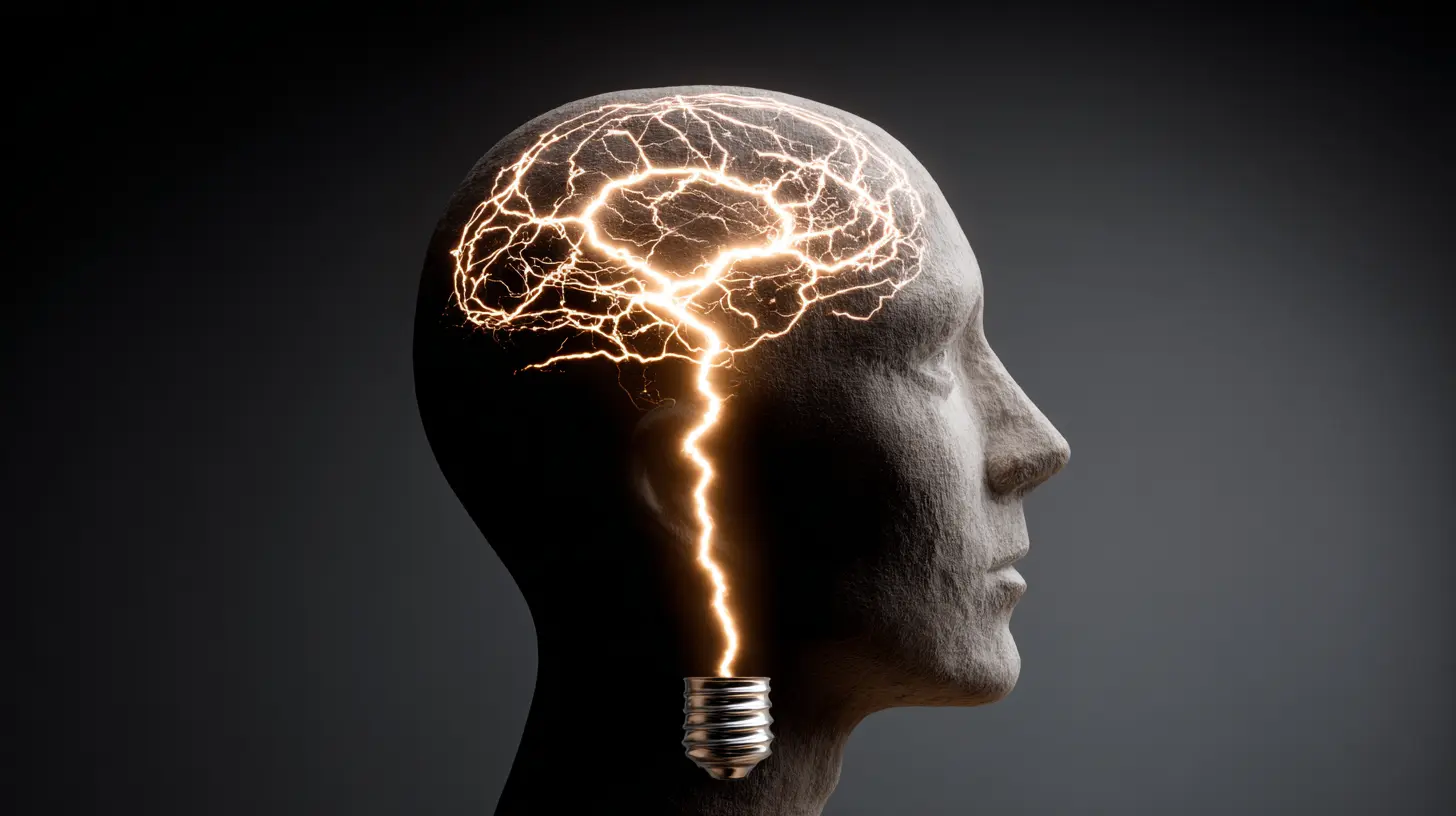
The Prediction Machine: Why Your Brain is a Pessimist by Default
To rewire anything, you must first understand its original wiring. Your brain is not designed to make you happy; it is designed to keep you alive. For millions of years, the primary threat to survival was not a bad day at the office; it was a predator in the bushes. Your brain developed a negativity bias, which is a hardwired tendency to register and remember negative experiences more readily than positive ones.Think of it as a smoke detector. A good smoke detector is overly sensitive. It will go off if you burn toast because the cost of missing a real fire is catastrophic. Your brain does the same thing with potential threats. It scans the environment for what could go wrong, not what is going right. When you try to "be positive," you are fighting this ancient alarm system with sheer willpower. That is exhausting and often ineffective.
The key to rewiring is not to argue with the smoke detector. It is to change the fire code. In 2027, we understand that the brain is a prediction machine. It doesn't just react to the world; it constantly predicts what will happen next based on past data. If your past data is filled with failures, disappointments, and stress, your brain will predict more of the same. This prediction creates a self-fulfilling prophecy. You expect to fail, so you don't try as hard, you miss opportunities, and you fail. The brain then says, "See? I was right," and reinforces the pessimistic pathway.
Optimism, therefore, is not about lying to yourself. It is about giving your brain new data to predict from. You are essentially auditing the data your brain uses to make its predictions.

The First Rewire: Cognitive Reframing with the "Is It True?" Test
The most common advice for pessimism is cognitive reframing, but most people do it wrong. They try to replace a negative thought with a positive one. For example, if you think, "I am going to fail this presentation," you try to think, "I am going to give the best presentation ever." This is a lie, and your brain knows it. When you lie to your brain, it creates cognitive dissonance, which actually increases anxiety.The 2027 approach is more subtle and effective. It focuses on accuracy, not positivity. When you have a negative thought, do not challenge the emotion; challenge the prediction.
Let's use the presentation example. The pessimistic thought is, "I am going to fail." The reframe is not "I will succeed." The reframe is, "I am feeling anxious because I am unprepared in a few areas. I can review those sections, or I can focus on the parts I know well." This is called "realistic optimism." You are acknowledging the risk (the negative) but immediately pivoting to agency (the action you can take).
Here is a practical exercise to do when you catch a pessimistic thought spiraling. Ask yourself three questions:
1. Is this thought a fact or a feeling? (Usually, it is a feeling dressed up as a fact).
2. Is there a less catastrophic explanation? (Maybe your friend didn't text back because they are driving, not because they are angry).
3. What is one thing I can control right now? (You cannot control the outcome, but you can control your preparation, your breathing, or your next action).
This process forces the brain out of the amygdala (the fear center) and into the prefrontal cortex (the logic center). Every time you do this, you are creating a new fork in the road. The old path says, "Catastrophe." The new path says, "Let's look at the evidence." Over time, the brain learns to take the new fork more often.

The Gratitude Paradox: Moving Beyond the Daily Journal
You have heard that gratitude is powerful. You have probably tried a gratitude journal and quit after a week because it felt forced or fake. That is because listing things you are grateful for is a passive activity. It is like reading about exercise and expecting to get fit.In 2027, the science points to "experiential gratitude" over "transactional gratitude." Transactional gratitude is saying "thanks" for a coffee. Experiential gratitude is savoring the warmth of the cup, the smell, and the moment of peace it gives you. The brain does not register a list of facts as deeply as it registers a sensory experience.
Here is the specific neural rewire: Your brain has a default mode network (DMN) that activates when you are idle. This is where mind-wandering and rumination happen. When you practice deep, experiential gratitude, you are actively suppressing the DMN and activating the reward circuitry (dopamine and serotonin pathways).
To make this work, you must change how you journal. Do not write, "I am grateful for my health." Instead, write about a specific moment. For instance: "This morning, I watched the steam rise off my coffee and I had a full minute of silence before the kids woke up. It felt peaceful." You are not just listing an item; you are reliving a positive experience. This forces the brain to encode that memory as significant.
The best time to do this is not at night when you are tired. It is in the morning, to set the predictive tone for the day, or immediately after a positive event to cement it. The goal is to train your brain to notice the positive moments in real time, not just in retrospect. This is called "positive savoring," and it is a skill that requires you to slow down your internal pace.

Social Contagion: Auditing Your Environment for 2027
We like to think we are independent thinkers, but neuroscience disagrees. Mirror neurons in your brain fire not only when you perform an action but also when you observe someone else performing that action. This means emotions are contagious. Optimism and pessimism are not just internal states; they are social phenomena.If you are surrounded by people who catastrophize, who constantly complain, or who view the world through a lens of scarcity, your brain will mirror that state. It will predict that the world is a hostile place because your social environment is telling it so. Rewiring your brain in 2027 requires an environmental audit.
This does not mean you should cut off all pessimistic friends. That is a simplistic and often cruel interpretation. It means you need to manage your exposure and your reaction.
The Comparison Trap: Social media is a highlight reel. Comparing your behind-the-scenes to someone else's highlight reel is a fast track to pessimism. By 2027, the algorithms are more sophisticated than ever at showing you content that triggers engagement, which often means content that triggers anger or insecurity.
The Actionable Step: Curate your feed aggressively. Unfollow accounts that make you feel inadequate. Follow accounts that educate, inspire, or simply make you laugh. But more importantly, change how you interact with the people in your physical life. When a friend starts a negative spiral, do not join them. Instead, ask a question that redirects to agency: "That sounds tough. What do you think you will do about it?" This does two things. First, it stops you from absorbing their negativity. Second, it subtly trains them to think more constructively, which in turn creates a more positive environment for you.
The Physical Rewire: How Sleep and Movement Dictate Your Outlook
You cannot think your way into optimism if your brain is running on empty. The connection between the body and the mind is not a metaphor; it is a biological reality. The gut-brain axis and the endocrine system are the hardware on which your cognitive software runs.Sleep is the ultimate optimizer. During deep sleep, specifically REM sleep, the brain processes emotional memories. It takes the raw emotional charge out of experiences and files them into long-term memory. If you are sleep-deprived, the amygdala becomes hyper-reactive. You will perceive threats that are not there, and your ability to access the prefrontal cortex for rational thought decreases. In 2027, prioritizing sleep is not an act of laziness; it is a foundational act of mental hygiene. If you want to rewire for optimism, you need a well-rested brain to do the rewiring.
Movement is the lever. The research is clear that exercise is as effective as medication for mild to moderate depression, but its role in optimism is often overlooked. When you move your body, you are not just releasing endorphins (the feel-good chemicals). You are also releasing proteins called growth factors, which help build new neural connections.
The specific type of movement matters less than the consistency. The best exercise for your brain is the one you will actually do. However, there is a specific "optimism effect" linked to bilateral movement, like walking, running, or swimming. These activities engage both hemispheres of the brain in a rhythmic pattern, which has been shown to help integrate emotional memories and reduce rumination. A 20-minute walk where you leave your headphones at home and focus on your surroundings can be a powerful form of active meditation.
The "Anti-Fragile" Mindset: Redefining Failure for the Future
A major block to optimism is the fear of failure. We treat failure as an identity, not an event. When we say, "I am a failure," we are cementing a pessimistic neural pathway. The brain will predict failure because it believes it is part of your character.The most effective shift for 2027 is moving from a "fixed mindset" to a "growth mindset," but we need to update the terminology to what we now know about neural pathways. Think of it as becoming "anti-fragile." An anti-fragile system is one that gets stronger under stress, like muscle. A fragile system breaks under stress, like glass.
Pessimism treats every setback as a confirmation of fragility. Optimism treats every setback as data for strengthening.
Here is a practical method to rewire the fear of failure. It is called the "Worst Case, Best Case, Most Likely Case" analysis. When you are anxious about an upcoming event, write down three scenarios:
1. Worst Case: (e.g., I lose my job).
2. Best Case: (e.g., I get a promotion).
3. Most Likely Case: (e.g., I get constructive feedback and a plan to improve).
Most people stop at the first scenario. The act of forcing yourself to write the "Most Likely Case" is the rewiring. You are training your brain to look at probability rather than possibility. The worst case is possible, but it is rarely probable. By objectively analyzing the most likely outcome, you are grounding your brain in reality, which is a powerful antidote to anxiety-driven pessimism.
you must consciously reframe past failures. Your brain stores the memory of the failure, but it does not automatically store the lesson. You have to actively extract the lesson. Ask yourself: "What did that experience teach me that I would not have learned otherwise?" This does not mean you are grateful for the failure; it means you are not wasting the pain. You are turning it into a building block.
The 2027 Toolkit: Technology as a Tool, Not a Crutch
We are in a unique position in 2027. We have technology that can track our moods, guide our meditations, and even measure our heart-rate variability (HRV), which is a physical indicator of stress resilience. However, the mistake many make is using this technology to "fix" themselves, which actually reinforces the belief that they are broken.The Wearable Warning: If you are constantly checking your HRV or sleep score and feeling anxious when the numbers are low, the technology is feeding your pessimism. The goal is not to achieve a perfect score; the goal is to use the data to inform your choices. If your HRV is low, that is not a sign that you are a failure. It is a sign that you need to slow down. It is a prompt for a breathing exercise, not a trigger for a panic attack.
The AI Companion: By 2027, AI chatbots are becoming sophisticated enough to serve as basic cognitive behavioral therapy (CBT) tools. They can help you identify cognitive distortions in your thinking patterns. For example, if you write, "I always mess things up," an AI CBT tool can point out that this is "all-or-nothing" thinking. This is a useful check, but it should never replace human connection. The data shows that the therapeutic alliance, the relationship between the person and the therapist, is one of the strongest predictors of success. A chatbot cannot offer that genuine empathy.
The Digital Sunset: The most critical technology rule for rewiring is the "digital sunset." The blue light from screens suppresses melatonin, disrupting sleep. But more than that, the endless stream of information keeps your brain in a state of "fight or flight." To rewire for optimism, you need periods of "rest and digest." You need boredom. Boredom is actually a state of low external stimulation that allows the DMN (the default mode network) to create new, novel connections. It is often in these moments of boredom that creative solutions and optimistic perspectives emerge. Do not fill every spare second with a podcast. Leave some empty space.
Putting It All Together: A Realistic Plan
Rewiring is not a linear process. You will have days where you fall back into old patterns. This is not a sign of failure; it is a sign that you are human. The goal is not to be happy all the time. The goal is to be resilient.Here is a sample structure that incorporates the principles above. This is not a rigid prescription but a framework you can adapt.
Morning (Setting the Prediction):
- Upon waking, before checking your phone, take three deep breaths.
- Ask yourself: "What is one thing I am looking forward to today?" This is not a huge goal; it can be a good cup of coffee. This sets a positive prediction.
- Move your body for 10 minutes. A brisk walk or some stretching is enough to signal to the brain that you are safe and in control.
Midday (The Check-In):
- When you notice a pessimistic thought, pause. Do not engage with the emotion. Ask the "Is It True?" test questions.
- Practice "positive savoring" for 30 seconds. Really taste your lunch. Feel the sun on your skin. Force your brain to register a positive sensory input.
Evening (The Consolidation):
- Perform the "Experiential Gratitude" exercise. Write one specific, vivid moment from the day that felt good.
- Audit your social interactions. Did you spend time with energy vampires? Did you engage in gossip? Make a mental note to limit that tomorrow.
- Enforce your digital sunset. Stop looking at screens at least 30 minutes before bed. Read a physical book or do a guided body scan meditation.
Common Mistakes to Avoid
- The "Optimism as a Destination" Trap: You will not "arrive" at a permanent state of optimism. It is a daily practice, like brushing your teeth.- Suppressing Negative Emotions: If you are sad, be sad. If you are angry, be angry. Optimism is not about ignoring these feelings. It is about not letting them become the sole narrator of your story. Acknowledge the feeling, validate it, and then ask what you can do next.
- Comparing Your "Inside" to Someone Else's "Outside": You see your own struggles in detail; you only see the curated highlights of others.
- Confusing Optimism with Control: You cannot control everything. Optimism is the belief that you can influence what happens next, even if you cannot dictate it.
The Long Game
The science of neuroplasticity tells us that lasting change requires repetition over time. You are not going to rewire your brain in a week. But you can make a meaningful shift in a few months if you are consistent. The brain is stubborn, but it is also loyal to your training.By 2027, the concept of "mental fitness" should be as normal as "physical fitness." You do not go to the gym once and expect to be strong. You do not run a marathon without training. Your brain is no different. Every time you choose to look for evidence instead of assuming catastrophe, every time you savor a positive moment, and every time you get a good night's sleep, you are laying down a new brick on the path toward optimism.
The future is not something that happens to you. It is a prediction your brain makes, and you have the power to change the algorithm. Start small. Be consistent. And be patient with the process. The path is there, waiting for you to walk it.
all images in this post were generated using AI tools
Category:
Emotional WellnessAuthor:

Eileen Wood
Discussion
rate this article
2 comments
Zevan McPhail
This article offers valuable insights into fostering optimism. Practical tips like mindfulness and gratitude can truly transform our mindset. Thanks for sharing!
September 13, 2026 at 2:27 PM
Franklin Webster
Thank you for sharing these practical insights on cultivating optimism. In a world that can often feel overwhelming, your tips provide a refreshing perspective. I appreciate the focus on actionable steps to rewire our thinking for a brighter outlook.
September 10, 2026 at 4:49 PM
Eileen Wood
I'm glad you found the insights helpful! Focusing on actionable steps can really make a difference. Thanks for reading!