How Families Can Benefit from Walking Together
28 September 2026
Most families do not lack good intentions. They lack a shared activity that survives soccer practice, homework, screen time, and the sheer exhaustion that comes with running a household. Walking together fills that gap better than almost anything else, and it does so without requiring equipment, memberships, or a major time commitment. A pair of shoes and thirty minutes will do.
That simplicity is exactly why walking gets overlooked. It feels too basic to matter. But the benefits stack up in ways that are physical, emotional, social, and logistical all at once. This article breaks down what actually happens when families walk together, why it works, where it can go wrong, and how to build a routine that lasts longer than a week.
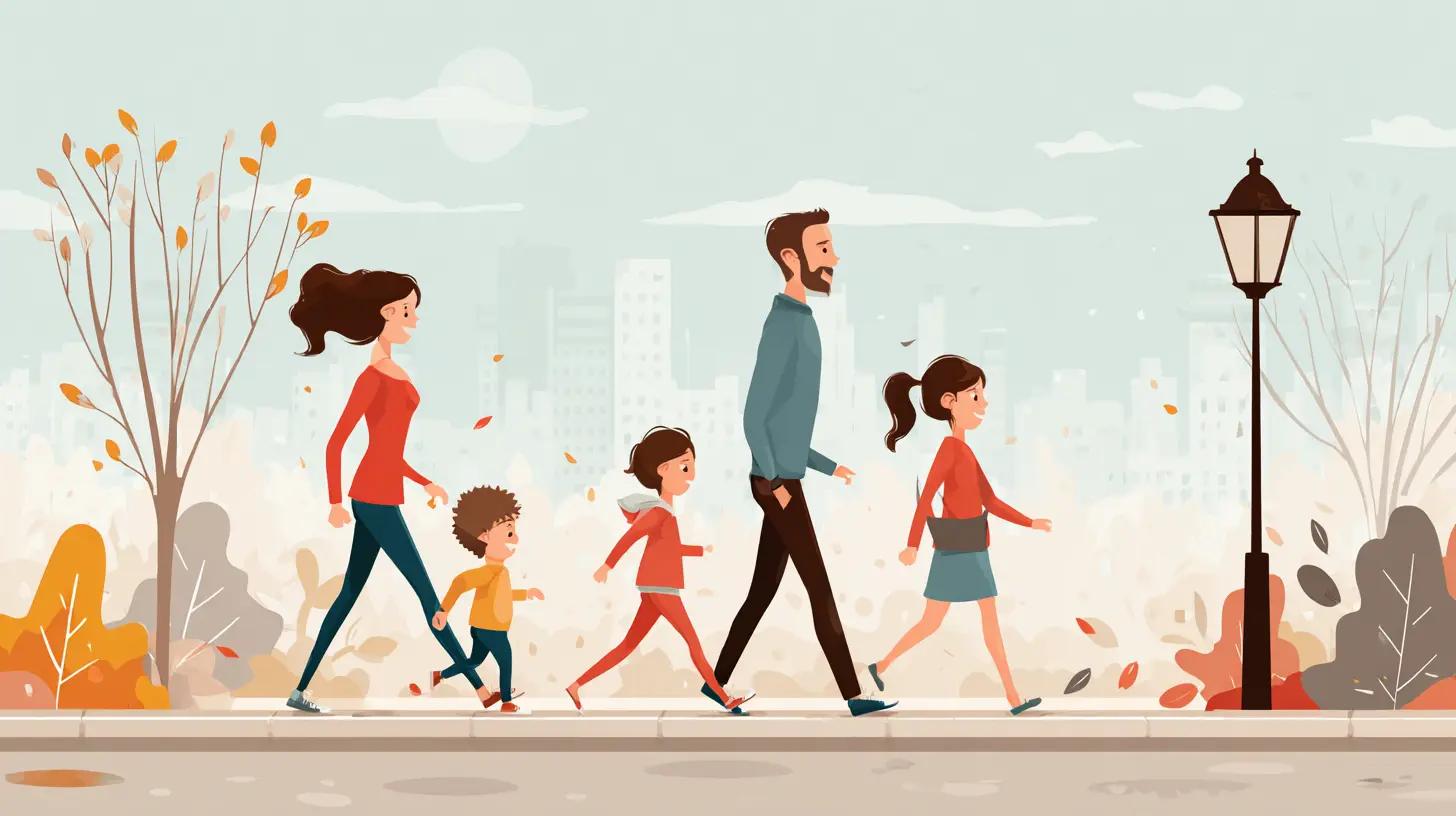
Why Walking Works When Other Family Activities Fail
Think about the typical family fitness plan. Someone suggests a gym membership, a weekend hike, or a sport everyone can play. These ideas are fine in theory. In practice, they run into friction. Gyms cost money and require childcare. Hikes demand planning and good weather. Organized sports often split the family into different locations at different times.Walking sidesteps nearly all of that friction.
It has no entry fee. It happens outside your front door. It scales from a ten-minute loop around the block to a two-hour trail depending on the day. A five-year-old can do it. A grandparent can do it. Someone recovering from an injury can often do a slow version of it. That flexibility matters more than people realize, because the biggest predictor of whether a family activity sticks is not intensity. It is whether you can repeat it on a random Tuesday when everyone is tired.
There is also a psychological benefit to walking side by side rather than sitting face to face. Conversations tend to flow more easily when eyes are forward and bodies are moving. Many parents notice that kids who clam up at the dinner table will open up halfway through a walk. This is not a coincidence. Movement reduces the pressure of direct eye contact, and the informal setting lowers everyone's guard.
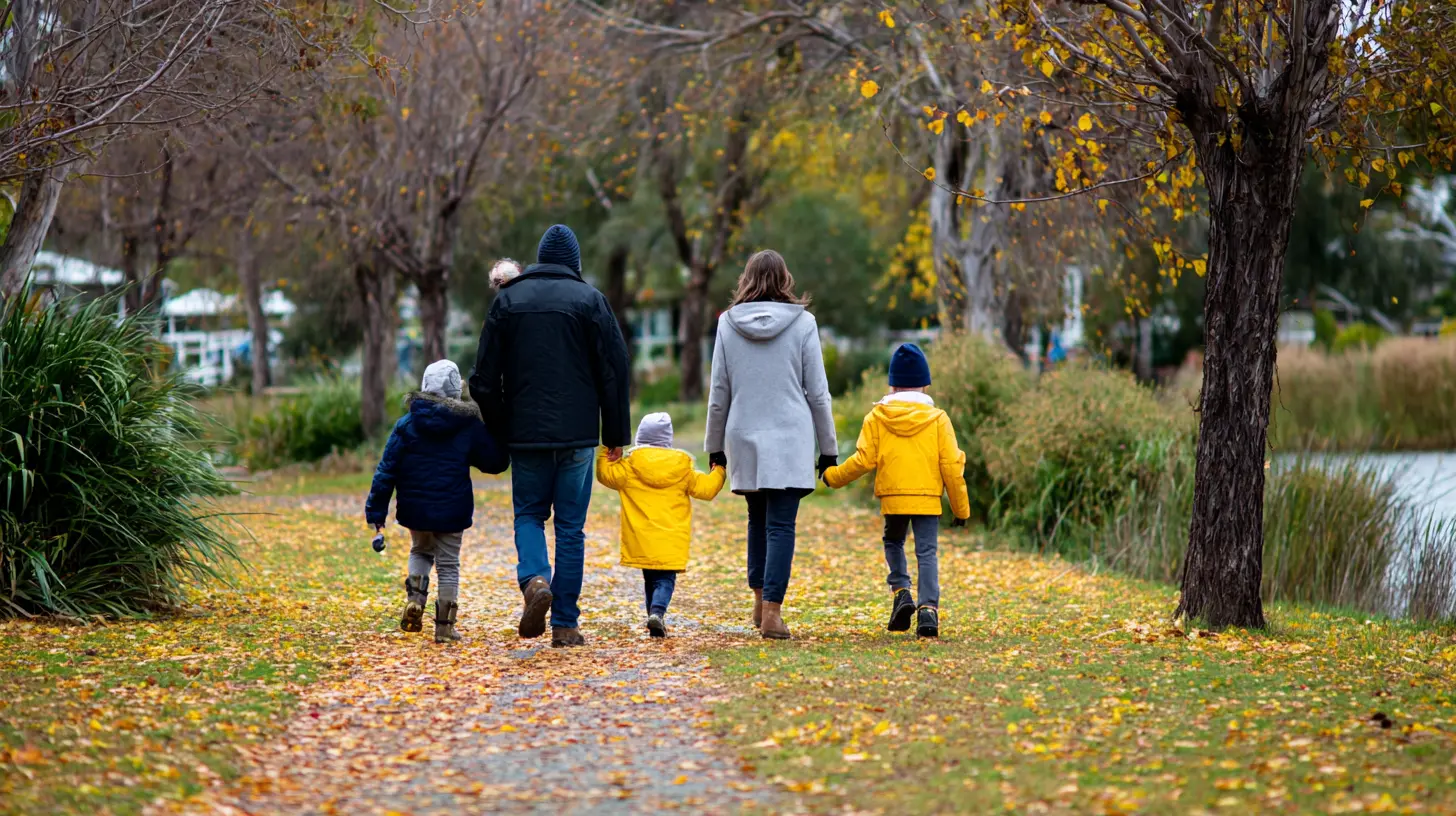
The Physical Health Benefits, Explained Properly
You have probably heard that walking is good for you. What matters here is understanding why, and how it applies specifically to families with mixed ages and fitness levels.Cardiovascular and metabolic effects
Regular brisk walking strengthens the heart, improves circulation, and helps regulate blood sugar. For adults, this translates into lower risk of heart disease, type 2 diabetes, and high blood pressure over time. For children, it builds a foundation of cardiovascular fitness that supports sports, sleep, and even classroom concentration.The key word is regular. One long walk on Sunday does less for your heart than five shorter walks spread across the week. This is why the family format is so powerful. It turns a single healthy habit into a recurring one, and recurrence is where the real physiological payoff lives.
Joint health and low impact movement
Running and high-intensity training can be hard on knees, hips, and ankles, especially for people carrying extra weight or recovering from injury. Walking delivers many of the same cardiovascular benefits with far less joint stress. That makes it one of the few activities a whole family can share regardless of age or condition.For older adults in the household, this is significant. Walking helps maintain bone density, balance, and muscle tone, which directly reduces fall risk. For younger kids, it supports healthy bone development and motor coordination.
Weight management without the diet talk
Walking burns calories, but framing family walks as a weight loss tool is usually a mistake. It invites body image issues and turns a pleasant activity into a chore. A better approach is to treat walking as something you do because it feels good and because it is time together. Weight regulation tends to follow naturally when movement becomes a normal part of the day.
The Mental and Emotional Payoff
The mental health benefits of walking are often undersold. They are also some of the strongest reasons to make it a family habit.Mood and stress regulation
Physical activity triggers the release of endorphins and other mood-regulating chemicals. Walking outdoors adds sunlight exposure, which supports serotonin production and helps regulate sleep cycles. For kids dealing with school stress and adults dealing with work pressure, a daily walk can function as a reset button.Notice the timing effect. A walk after school or after work helps people transition out of one mode and into another. It creates a buffer between the demands of the day and the calm of the evening. Families who build this buffer often report less bickering at dinner and smoother bedtimes.
Conversation and connection
This is where walking quietly outperforms almost every other family activity. In a car, everyone faces forward but attention is split by traffic and phones. At a table, conversation can feel like an interview. On a walk, there is a shared rhythm and a shared view. Silence is comfortable. So is talking.Children often use this space to bring up things they have been holding in. Teens, who may resist formal check-ins, tend to open up more on a walk because it does not feel like a confrontation. The activity is the point, and the conversation rides along with it.
Screen time reduction
You do not have to ban screens to reduce screen time. You just have to offer something better. A walk competes surprisingly well with devices once it becomes routine, because it satisfies the need for stimulation, novelty, and social contact at the same time.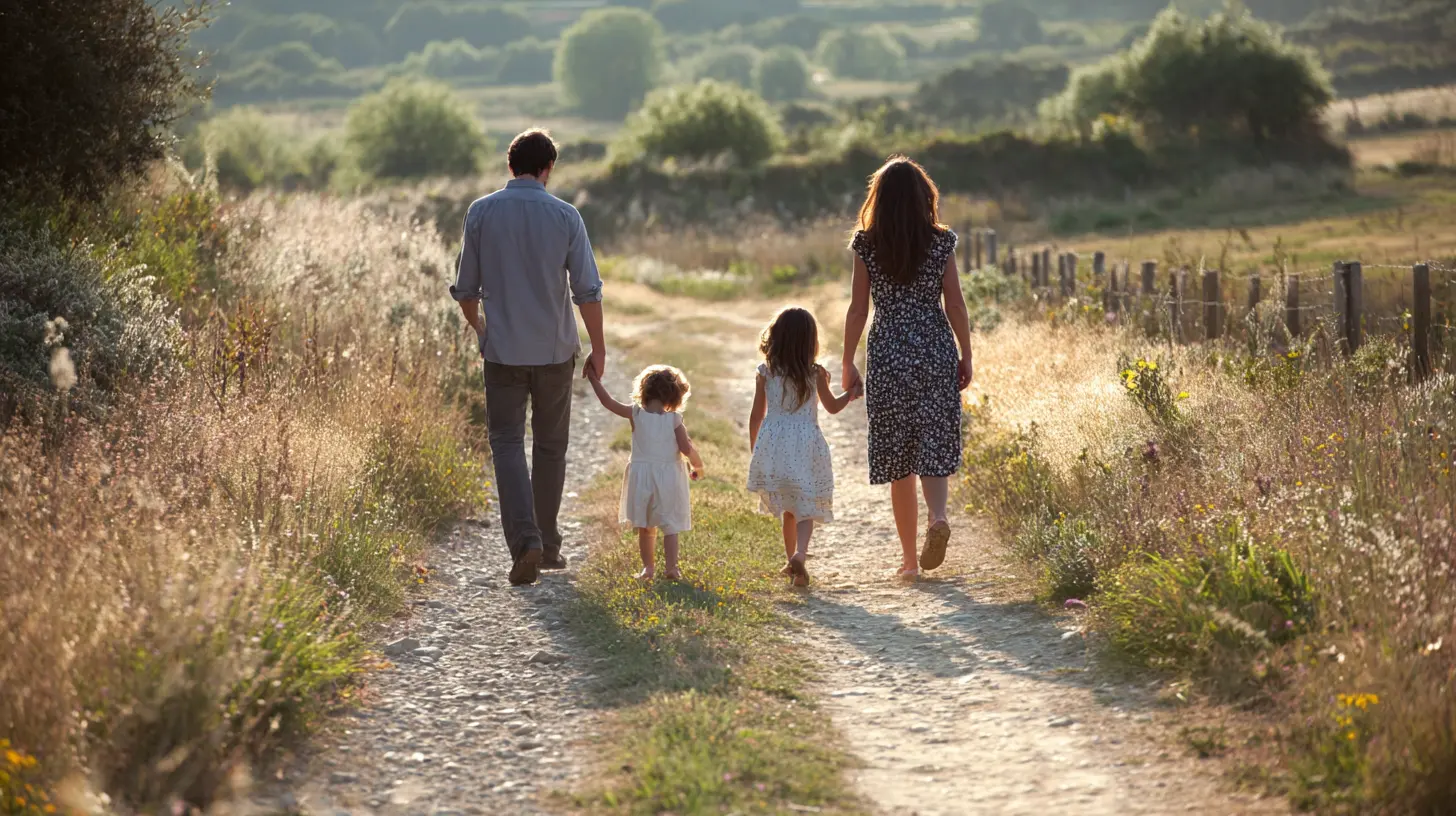
Building the Habit Without Turning It Into a Chore
The biggest mistake families make is going too big too fast. They plan a five-mile hike on day one, everyone ends up sore or cranky, and the idea dies. Here is how to avoid that.Start smaller than feels necessary
A ten-minute walk around the block is a legitimate family walk. Do that for two weeks before adding time. The goal in the beginning is not fitness. It is repetition. You are training the family to expect a walk, not to endure one.Anchor it to an existing routine
Habits stick when they attach to something that already happens. Walking after dinner is the classic anchor because it is a natural transition point and the whole family is usually together. Other options include a short walk before school, a Saturday morning loop, or a post-dinner stroll on weeknights only.Let kids have real input
Children are far more likely to participate if they help decide the route, the pace, or the destination. Let them pick a direction at each corner. Let them choose the music if you bring a speaker. Let them be the official map reader. Ownership beats instruction every time.Skip the performance pressure
Do not turn family walks into a fitness test. No stopwatch, no pace targets, no commentary about who is slow. The moment a walk becomes a competition, the least fit or least willing family member starts looking for exits.Practical Logistics That Make or Break the Routine
A family walk sounds simple until you factor in weather, schedules, and the fact that someone always needs a snack. A little planning goes a long way.Timing
Late afternoon and early evening work best for most families. The light is softer, temperatures are milder, and the walk doubles as a transition into the evening. Morning walks suit families with early risers or those in hot climates. The best time is the one you can actually keep.Gear
You do not need much, but a few items make a difference:- Comfortable, broken-in shoes for everyone
- A light jacket or layer depending on the season
- Water for walks longer than twenty minutes
- A small bag for keys, phones, and snacks
- Reflective clothing or a small light for evening walks
For families with toddlers, a stroller works for shorter routes. Once kids can walk confidently, let them. Carrying them defeats part of the purpose.
Route variety
Same route every day gets boring. Rotate between a few options: the neighborhood loop, a nearby park, a school track, a greenway, or a simple out-and-back on a quiet street. Novelty keeps interest alive, especially for younger children.Weather reality check
You will not walk every day. Rain, extreme heat, and busy schedules will interrupt. That is fine. The goal is not perfection. It is resuming quickly after a break instead of letting one missed week turn into three missed months.
Walking With Different Age Groups
A family walk looks different depending on who is in the family. Here is how to adapt.With toddlers and preschoolers
Keep it short and make it an adventure. Count dogs, look for specific colors, or turn the walk into a scavenger hunt. Distance is irrelevant. Engagement is everything. A fifteen-minute walk where the child is happy is worth more than a forty-minute walk where everyone is miserable.With school-age kids
This is the sweet spot. Kids this age have energy to burn and enjoy a sense of purpose. Let them lead, race to a landmark, or bring a scooter or bike alongside. This is also the age when they start sharing more about their day, so resist the urge to fill every silence.With teenagers
Teens may resist anything that feels like a family mandate. The trick is to make it optional and low-key. A casual "I'm going for a walk, want to come?" works better than a scheduled family event. Some teens will say no for weeks and then surprise you by saying yes. Keep the invitation open and do not take the early refusals personally.With grandparents or family members with mobility limits
Choose flat, even routes with benches. Slow the pace. Shorten the distance. If mobility is a real constraint, a walk around a mall or a paved park loop can work just as well as a trail. The point is the shared time, not the terrain.With dogs
Family dogs usually love this. Just be honest about whether the dog walks well on a leash. A poorly trained dog can turn a relaxing walk into a wrestling match. If needed, do a few solo training walks first.Common Mistakes and How to Avoid Them
Even well-meaning families run into predictable problems. Here are the ones that come up most often.Making it too structured
Some families try to turn every walk into a lesson, a workout, or a scheduled event. That kills the spontaneity that makes walking appealing. Leave room for aimless wandering.Ignoring the slowest person
If one family member is always trailing behind or being rushed, they will start to dread the walk. Match the pace of the slowest person, or split into two groups that meet at a midpoint. Inclusion matters more than speed.Using it as a lecture opportunity
A walk is not the time to bring up grades, chores, or behavior. If you do, kids will associate walking with criticism and stop coming. Keep the tone light.Quitting after one bad walk
Some walks will be terrible. Someone will complain, the weather will turn, or a kid will melt down. That is normal. One bad walk does not mean the habit failed. It means you had a bad walk.Forgetting to make it fun
Adults often underestimate how much kids value small pleasures. A stop at a playground, a snack at the halfway point, or a quick game of I-spy can turn a routine walk into something kids actually request.
How to Measure Whether It Is Working
You do not need a spreadsheet, but it helps to notice signs that the habit is taking hold.- Kids ask to go for a walk
- Conversations happen more easily than they do indoors
- Everyone sleeps a little better
- The walk feels like part of the day, not an interruption
- Missing a walk feels noticeable
If none of these are happening after a month, something in the routine needs adjusting. Maybe the timing is wrong. Maybe the route is boring. Maybe the pace is too fast. Tweak one variable at a time and see what changes.
A Realistic Weekly Template
Here is one example of how a family with two working parents and two school-age kids might structure walks. Adjust freely.- Monday: Short after-dinner loop, fifteen minutes
- Tuesday: Skip, busy evening
- Wednesday: Neighborhood walk with the dog, twenty minutes
- Thursday: Skip
- Friday: Walk to a nearby park, kids play for ten minutes, walk back
- Saturday: Longer walk or easy trail, forty-five to sixty minutes
- Sunday: Optional evening stroll, whatever feels right
Notice that this is not daily. It is consistent without being rigid. That is the pattern most families can actually sustain.
Why This Matters More Than It Seems
Family life is fragmented. Different schedules, different screens, different rooms. Walking together is one of the few activities that pulls everyone into the same space, at the same pace, doing the same thing. It builds fitness, yes. But it also builds something harder to measure: a shared rhythm, a sense of belonging, and a store of small memories that kids carry with them.You do not need a perfect plan. You need shoes, a door, and thirty minutes. Start tonight. See where it leads.
all images in this post were generated using AI tools
Category:
Walking For HealthAuthor:

Eileen Wood